Get Full Government Meeting Transcripts, Videos, & Alerts Forever!
Get email alerts on the Food Service License Exemptions topic
No spam. Unsubscribe anytime.
Committee hears bill to exempt event-only venues from food-service licenses
Summary
Lawmakers took testimony on House Bill 4042 after wedding-venue owners said county and state regulators required food-service licenses for sites without kitchens, creating duplicate fees and operational costs.
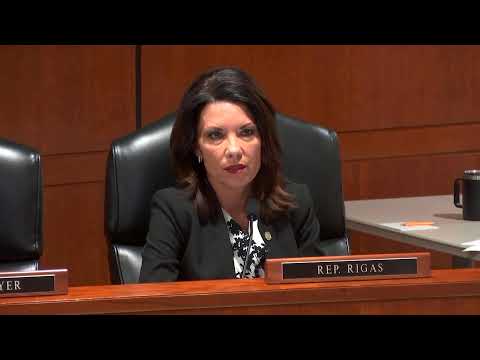
House Regulatory Reform Committee members on Wednesday heard testimony on House Bill 4042, which would change how food-service licensing applies to event venues that do not have a kitchen. Sponsor Representative Carter introduced the measure and venue operators described being required to obtain food licenses despite having no on-site kitchen.
Supporters said the existing enforcement produced what they called a “double dip” in fees and requirements. "There have been some establishments that don't have kitchens, but people want to rent them out for events," Representative Carter said. "They have to pay a food service fee, and they don't even have a kitchen." Representative Mueller, who described his family's orchard wedding venue, told the committee that state and local inspections prompted a permit and licensing cascade: "MDARD came out to do the inspection ... and then MDARD decided to tell the county health department," he said. "They came back out and said we needed to have a food license ... we just rent out the venue. A licensed caterer comes in and sets the food up."
Committee members asked how the enforcement unfolded. Representative Dyer asked whether the state or county health department initiated the action; witnesses said Michigan Department of Agriculture & Rural Development (MDARD) inspected the site and notified the county health department, which then required the food license. The venue operator said other costs, including water testing and septic permits, were required even though no kitchen existed and potable water was limited at the event site.
Witnesses said the bill would clarify that spaces rented for events and served by licensed caterers should not be required to hold a full food-service establishment license when no kitchen or food-preparation area exists on site. The sponsor described the bill as a response to complaints raised after the COVID-19 pandemic about new event-use patterns for nontraditional venues.
No committee action or vote on House Bill 4042 was recorded during the hearing. Committee members asked for follow-up on jurisdictional questions and the practical limits of county and state authority.
Looking ahead, the committee indicated it may request follow-up from MDARD and local health departments to clarify inspection and permitting protocols before taking further action on the bill.