Get Full Government Meeting Transcripts, Videos, & Alerts Forever!
Get email alerts on the Zoning Language Amendments Telecom Campgrounds Tracks topic
No spam. Unsubscribe anytime.
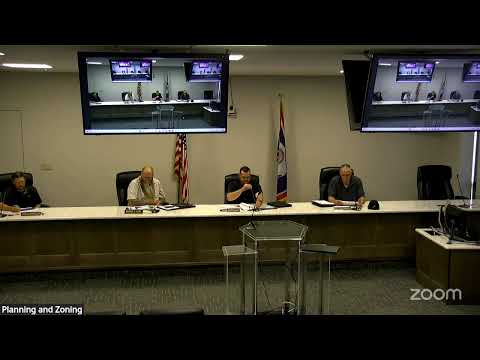
Planning commission approves zoning language changes covering telecom towers, campgrounds and tracks
Summary
Sweetwater County Planning and Zoning Commission approved a package of language amendments to the zoning resolution that add supplemental use regulations for wireless communication facilities, commercial campgrounds and definitions for tracks and related uses; changes were approved 4-0 after staff and commissioners discussed edits.
The Sweetwater County Planning and Zoning Commission voted 4-0 to approve a set of language amendments to the county zoning resolution that establish supplemental use regulations for wireless communication facilities, commercial campgrounds (including RV site standards), and a clarified definition and thresholds for motocross/track facilities.
Eric, a county planner, led the presentation and described the package as a consolidation and clarification of existing practices and new standards intended to guide siting and reduce conflicts. He told the commission the amendments create a supplemental use regulation that controls where wireless communication facilities of various heights are permitted or are subject to conditional-use review, and adds standards for distribution antenna systems (DAS), stealth facilities, roof-mounted antennas, setbacks, lighting and discontinuance/removal of abandoned facilities.
On wireless facilities, staff proposed height-based categories (for example, facilities up to 35 feet, 36–50 feet, 51–100 feet, and taller classes) and clarified that the zoning regulation would defer to the supplemental regulation where it applies. The draft requires submission materials commonly used by providers (site plans, elevation drawings, an engineering analysis certified by a licensed engineer, and evidence of efforts to co-locate) and directs decisions be supported by written findings consistent with the Telecommunications Act when applications are denied.
On campgrounds, staff proposed different rules for campgrounds with and without utilities, a minimum parcel size of 5 acres outside the Growth Management Area, a minimum campsite size of 300 square feet for tent/independent campsites, and an 1,800-square-foot minimum for RV sites (including parking and hookups) with a smaller 1,350-square-foot option for denser RV sites that include full utilities. Staff said sanitary facilities must be no more than 300 feet from dependent campsites, trash receptacles must be within 500 feet of any dependent site, interior roads must meet fire-code standards, and operators must submit a fire and emergency plan for review by local fire officials.
Staff also proposed a clarified definition for "track" and related uses to distinguish informal riding on trails from a regulated track. Under the new definition, a regulated track would be a continuous loop or designated area used for organized riding or racing that disturbs more than 5,000 square feet or involves the movement of 100 or more cumulative cubic yards of dirt. The change is intended to avoid treating occasional backyard jumps or single trail features as a full track.
Eric said the draft permits some facilities without a zoning permit (routine maintenance, amateur radio by federal law, and certain small antenna installations) and allows for reduced setbacks if a facility is designed as a stealth facility that blends into local character. He also noted the draft includes a discontinuance clause allowing the county to require removal of facilities after a period of dormancy (180 days) with removal within 120 days after notice.
Commissioners asked several technical questions and discussed noise and dust enforcement for tracks; one commissioner suggested replacing the term "animal vehicle" with "motor vehicle" in the track definition to better reflect the concern about motorized noise. A commissioner noted the amendments on telecommunications and campgrounds had been discussed previously with service providers and other commissioners; staff said they had met with several commissioners and outside stakeholders while drafting the package.
After closing the public hearing with no speakers, the commission voted to approve the amendments "with all changes that we have made during this hearing," per the motion and the roll call. The commission's action advances the language amendment as adopted at this hearing; further steps for adoption will follow county procedures for zoning changes.