Get Full Government Meeting Transcripts, Videos, & Alerts Forever!
Get email alerts on the School Budget topic
No spam. Unsubscribe anytime.
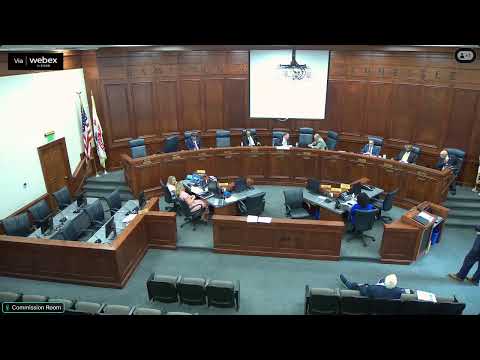
Hamilton County leaders hold joint budget hearing on school pay, staffing and transparency
Summary
County commissioners and the Hamilton County School Board met for a budget hearing in which school leaders defended a balanced, flat-revenue budget and commissioners pressed for detail on salary increases, staffing growth, stipends and contracted services. Speakers called for better coordination and more time to review future budgets.
Hamilton County commissioners and members of the Hamilton County School Board met for a budget hearing focused on Hamilton County Schools’ balanced, flat-revenue budget and rising personnel costs.
Joe Smith, chairman of the Hamilton County School Board, told the county commission that school board members had worked through a difficult process to present a balanced budget and urged cooperation: “These 2 bodies working together. What if? Just imagine with me for a minute. There’s 11 of you. There’s 11 of us.”
The hearing centered on the scale and drivers of recent personnel spending. Commissioners and board members discussed a reported $78,000,000 increase in salaries since 2020 (described in the meeting material as a roughly 34.5% rise), an emphasis on directing “strategic” dollars to schools, and several line items that commissioners said need clearer explanation.
Why it matters: School payroll is the largest part of the district budget and is the single biggest issue in the county’s budget conversations. The speakers tied personnel spending to teacher recruiting and retention, support services for students, and state funding changes that have increased recurring revenue.
Details and debate
Dr. Robertson, director of schools for Hamilton County Schools, said the district had directed significant one-time and ongoing funding to individual schools. “We’ve sent $39,000,000 in strategic money straight to schools, and given them the flexibility,” he said, and he described a recent budgeting change that consolidated some pay and leave liabilities into discrete lines. Robertson also said the district set aside about $1,000,000 to cover leave payouts that were not previously budgeted in that line.
Board member Felice Hadden defended the district’s staffing approach and pushed back against calls to “cut central office.” “Our central office is less than 8% of our total staff, which is under the national average,” Hadden said, and she described investments in counselors, social workers and student-support coaches as responses to student needs after the pandemic.
Several commissioners pressed for granular data. One commissioner cited an increase in stipends from about $3,900,000 to $11,800,000 and asked what accounted for the change; Robertson and board staff said that growth largely reflects increased pay for athletic coaches and formalizing payments that were previously coded in other salary lines. Robertson called out substitute-teacher contracting, copier usage and sport medicine contracts among items included in contracted services.
The budget presented to the commission does not include a planned step or longevity increase for teachers this year; several commissioners and a board member called that omission a difficult policy choice. Commissioner Sharp said, “No step raises this year. That’s really hard for me to swallow,” reflecting concern about teacher expectations and contract precedent.
State funding and revenue context
Officials noted that much of the district’s revenue growth in recent years has come from the state. A county official said the new state funding formula (discussed in the hearing as BEP/TISA changes) accounts for a large portion of the added revenue, and another speaker said state revenue to the district rose by about $17,000,000 this year.
Program funding and student supports
Officials discussed several programmatic items in the budget. Robertson said the district uses differentiated compensation and targeted “strategic” funds to retain staff in hard-to-staff schools and to address student needs in schools with high concentrations of poverty. The district also budgets for dual-credit and “future ready” programs; Robertson said some dual-credit costs are covered by state scholarship dollars flowing through the student to the postsecondary institution, while other program costs show up across salary, CTE and transportation lines depending on services provided.
Process, transparency and next steps
Multiple commissioners and board members urged stronger, routine coordination between the commission and the school board. Several speakers recalled earlier joint meetings and encouraged resuming regular meetings so the two bodies can review revenue and budget assumptions together rather than holding repeated public budget sessions. Commissioners also requested more time and clearer, itemized documentation in future budget cycles; Robertson noted the board posted multiple budget versions online during the adoption process.
No formal vote or change to the budget was recorded during the hearing. Several commission members said they will continue to seek detailed breakdowns of positions and line items and to invite the school board to future joint discussions.
Taper: Commissioners and school board members expressed repeated support for sustained cooperation. Multiple speakers said the conversation should continue in the coming months as the two bodies refine budget detail and discuss long-term revenue and staffing strategies.