Get Full Government Meeting Transcripts, Videos, & Alerts Forever!
Get email alerts on the Comprehensive Plan topic
No spam. Unsubscribe anytime.
Hamilton County commissioners review Plan Hamilton, order two-track approach amid density dispute
Summary
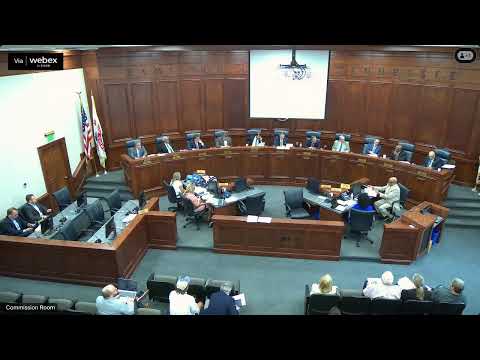
Hamilton County commissioners reviewed Plan Hamilton on June 25, considering both the plan the regional planning agency sent to the Planning Commission and a set of amendments proposed by the home‑building and real‑estate industry.
Hamilton County commissioners reviewed Plan Hamilton on June 25, considering both the plan the regional planning agency sent to the Planning Commission and a set of amendments proposed by the home‑building and real‑estate industry.
The county's planning staff described Plan Hamilton as a five‑area, five‑year guide to future physical development in unincorporated Hamilton County and asked commissioners for direction before Planning Commission adoption. Planning Commission had recommended the draft with a few staff edits and asked the County Commission to resolve several submitted amendment requests.
Why it matters: Plan Hamilton maps future place types (suburban residential, countryside residential, centers for nonresidential uses and other categories), sets suggested maximum densities and recommends policy changes governing future rezonings and subdivision review. Commissioners and dozens of residents and industry representatives said the plan will shape growth, housing costs, infrastructure needs and where roads and sewers will be built over the next five years.
Staff presentation and core proposals Karen Renick, deputy administrator of the Regional Planning Agency, told commissioners Plan Hamilton is intended to "be a guide for future physical development in unincorporated Hamilton County" and to inform zoning and rezoning decisions. The draft breaks the unincorporated county into five area plans and maps "place types" that carry recommended maximum densities and contextual recommendations: suburban residential (up to 5 dwelling units per acre), countryside residential (mapped at 2.0 and 2.5 dwelling units per acre in different locations), and smaller nodes for nonresidential centers.
Planning staff and Planning Commission recommended carrying several technical corrections and staff edits into the adopted plan, and asked the County Commission to advise whether Planning Commission should remove or retain certain broad statements in chapter text that some stakeholders labeled "overly broad." Planning Commission also asked that an appendix removal be clarified (some supporting documents should remain), and sought direction on the amendment cadence in the plan.
Industry amendments and the principal points of contention Representatives of the Home Builders Association and Greater Chattanooga Realtors urged changes they say would increase housing supply and affordability. Julian Bell, speaking for the home‑building industry, summarized those concerns in testimony: "Plan Hamilton, as proposed, promises to negatively impact 3 important things for Hamilton County. Housing cost, it will cause housing to be more expensive. Housing availability, it will cause fewer homes to be built. And property tax revenue. It will lead to slower property tax growth and lead to either higher taxes or reduced services."
Key industry requests included: - Increasing the countryside residential place‑type density allowance to 3 dwelling units per acre where sewer is available or where decentralized sewer systems (or new technologies) can be used; the draft plan maps most countryside residential at 2.0 or 2.5 units per acre. - Allowing plan amendments on a monthly basis rather than the draft plan's proposed six‑month amendment cycle, to avoid long delays when a rezoning requires a plan amendment. - Removing or clarifying several plan statements the industry labeled "overly broad" because they could be used to deny rezoning requests (for example, language saying "the majority of future development in Area 7 should be located within the incorporated town boundaries of Signal Mountain and Town of Walden"). - Asking that items described as potential new regulations (stormwater, steep slopes, landscape buffers, connection requirements between subdivisions, etc.) be processed through the normal regulatory amendment process rather than embedded as mandatory standards inside the plan text.
Public testimony and commission concerns Dozens of residents spoke during the hearing. Opposition testimony focused on roads, emergency response times, schools, stormwater/flooding and sewer capacity in areas proposed for higher density. Multiple speakers asked commissioners to preserve countryside character and to pause adoption until infrastructure—especially sewer and road funding—is assured. Engineer Kurt Wells told commissioners a large area already rezoned to R‑1 off Roberts Mill Road could add thousands of housing units and warned existing roads and bridges lack capacity.
Some commissioners urged urgency and flexibility. Commissioner Graham said that without additional housing supply "we're pricing our children and grandchildren out of homeownership," and urged policies that increase housing availability. Other commissioners said they want to move carefully, ensure plan text does not unintentionally limit housing production, and preserve the ability of the County Commission and Planning Commission to work together on site‑specific rezoning requests.
Next steps and commission action Rather than vote on a single, final plan, commissioners directed staff to draft two resolutions for formal consideration next week: A) a resolution to adopt Plan Hamilton as presented to Planning Commission with staff corrections and Planning Commission's requested edits; and B) a resolution to adopt Plan Hamilton with the specific industry amendments (density adjustments, monthly amendment cycle and the list of text clarifications the home builders/realtors submitted).
Planning staff said they will prepare redlined language and a matrix of proposed wording changes for both paths and return the package to Planning Commission for formal adoption of whatever version the County Commission directs. Planning staff noted that, under Tennessee law, if County Commission adopts a regional/general plan by resolution, subsequent land‑use decisions must be consistent with that adopted plan.
Quotes "Plan Hamilton is a guide for future physical development in unincorporated Hamilton County," Karen Renick said during the presentation. "The plan does note that we're really looking at five years for Plan Hamilton...that the goal is to update Plan Hamilton every five years."
"Plan Hamilton, as proposed, promises to negatively impact 3 important things for Hamilton County," Julian Bell told the commission. "Housing cost...Housing availability...And property tax revenue."
"If we don't get this plan right and we don't allow the growth to happen and have them smart...then we're going to worsen the problem," Commissioner Graham said in debate.
Ending County Commission set the item for a formal vote next week and asked staff to circulate printed binders and a redline/matrix of amendments in advance so commissioners can review the exact language before the vote. If the commission adopts a version by resolution, Planning Commission will be asked to adopt that same text as the county's regional plan under state law and to transmit the final document to the state.