Get Full Government Meeting Transcripts, Videos, & Alerts Forever!
Get email alerts on the Municipal Budget topic
No spam. Unsubscribe anytime.
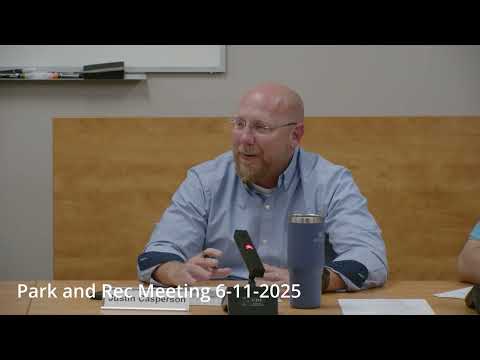
Marshfield parks staff outline service cuts and revenue options ahead of July budget deadline
Summary
City parks staff reviewed two years of cuts and a list of potential service reductions and revenue changes — from reduced mowing and restroom cleaning to contracting cemetery burials and shifting room-tax allocations — and asked the Park, Recreation and Forestry Committee for guidance before the department’s July budget submission.
Justin, parks department staff, told the Marshfield Park, Recreation and Forestry Committee on Wednesday that the department has absorbed numerous budget reductions in 2024 and 2025 and now faces choices that would reduce services or shift how parks operations are funded.
“It lists the budget cuts that were absorbed by the department the last 2 years ... We pretty much, at this point, gotta cut services,” Justin said, summarizing a gray handout that the department circulated showing nearly 100 line-item cuts and reductions.
The department identified several specific, already-implemented cuts and the services that remain at risk: roughly $4,300 trimmed from cemetery operations over two years; about $69,000 cut from general parks operations; a 20% reduction in splash-pad hours; mowing of most parks every other week after Aug. 15 (athletic fields excepted); restroom-cleaning frequency reduced by about 15% after Aug. 15; elimination of some portable toilets at Benedict, Forest Ridge and Upper Pond locations (donations temporarily covered some replacements); reduced seasonal staffing; and suspension of most ash-tree treatments except at isolated sites.
Justin told the committee the department has also removed a low-resolution “stealth” camera program (about $825 per year) after determining it produced unusable images, and has transferred maintenance of several University of Wisconsin fields to the university while still assisting on an as-requested basis.
The staff presentation included a list of larger options the department could pursue if deeper reductions are required: close Wenzel Family Plaza and fairgrounds ice rinks; reduce zoo hours; stop preparing fields for weekend tournaments; retain a larger share of room tax revenue now allocated to capital projects; create an enterprise fund for recreation, aquatics and special events; contract cemetery burials out to private providers; stop plowing trails; charge rental or lease fees uniformly to user groups; raise facility and program fees (the department has raised rental fees ~2.5–3% in recent years with no drop in usage, Justin said); or close or mothball some shelters and community buildings such as Oak Avenue Community Center.
Justin described funding mixes and donation mechanisms that already reduce taxpayer burden for specific amenities. For example, he said funding for Wenzel Plaza is split by prior agreement: “30% is paid for by Visit Marshfield. 30% is paid for by contract on the road board. 20% is covered by the city,” and added the Wildwood Zoological Society returns money collected in on-site donation canisters to the zoo for animal acquisition and programs.
Committee members asked for parameters around how much the city expects to cut overall; Justin said the department must submit a budget in July but that final targets can shift as citywide figures, referendums and other municipal-level budget decisions change later in the summer and fall. He asked committee members to review the list and return recommendations: “If you want to explore four of them, these are the ones I’d take a deeper dive on,” he told the committee.
No formal motions or votes were taken. The committee did not direct staff to adopt any specific cuts during the meeting; staff will submit a proposed budget in July and the council will review and set final targets later in the municipal budget process.
Next steps: Justin asked committee members to email him recommended “do’s and don’ts” in the next two weeks so staff can incorporate committee priorities before the July submission. The committee will discuss any focused options at future meetings and the council will take up the department budget in its administrative review and later public meetings.