Get Full Government Meeting Transcripts, Videos, & Alerts Forever!
Get email alerts on the Arts Culture Economics topic
No spam. Unsubscribe anytime.
Echols (Eccles) Theatre reports record attendance, net income and community programs for 2024
Summary
Salt Lake County Arts and Culture presented a year-end report for the Eccles (Echols) Theatre showing record net income, high attendance and several community programs supported by the CRA, including Arts for All ticketing and technical outreach.
Salt Lake County Arts and Culture staff told the Salt Lake City Community Reinvestment Agency that Eccles (Echols) Theatre posted strong 2024 results, including record net income, expanded community programs and substantial regional attendance.
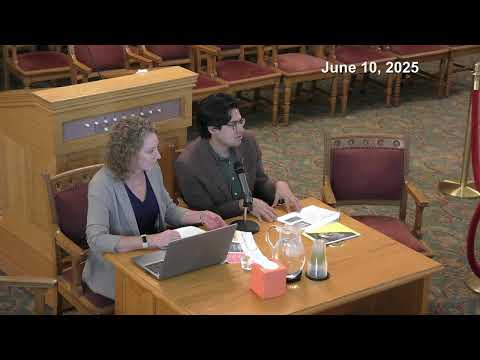
Matt Castillo, division director for Salt Lake County Arts and Culture, and Angela Vanderwell, associate division director and Eccles Theatre general manager, presented the year-end overview and said the reporting covered the county’s calendar year reporting. Castillo said the theatre’s Broadway series, Live at the Eccles programming and community-focused Regent Street Black Box together produced broad audience engagement; the Broadway series included 11 season titles and multiple high-performing runs in 2024, led by a record run of Wicked.
Vanderwell said the theatre’s Arts for All accessibility program—which is funded by a 50¢ per-ticket fee in Delta Hall—distributed tickets to 1,884 income-qualified residents in school districts and community organizations last year. She described a volunteer patron-services corps of 361 ushers who provided 24,987 hours of service and a technical-outreach program that offered 14 experiences for 175 high-school and university students. The Regent Street Black Box ran 94 performances with more than 6,000 attendees, Vanderwell said.
On finances, presenters reported approximately $5,000,000 in net income for the building reporting unit in 2024. Per the ownership distribution formula described to the board, the result will produce a capital-reserve contribution and distributions to owners: roughly $2.5 million to Salt Lake City/CRA (as part of UPA/ownership distribution) and about $1.6 million to Salt Lake County, pending final audit. The board was told the theatre currently carries about $7,000,000 in capital reserves and uses a 30-year facility maintenance plan for future capital needs.
Staff also presented activation and utilization metrics. Total attendance across building and site spaces was 436,975; the county’s arts-economic study estimated roughly $18,500,000 in direct local spending from attendees, with about 60% of attendees local and 40% nonlocal. Delta Hall’s venue-utilization rate was presented in the 50–60% range (industry benchmarks consider 60–70% full capacity), and staff said they expect continued strong results driven by touring Broadway cycles and Live at the Eccles programming.
Board members asked several questions about the Arts for All program’s eligibility and distribution. Vanderwell said Arts for All is limited to Salt Lake County residents who meet income-qualification criteria and that staff have expanded outreach and hired a staff member to focus on connecting tickets to eligible organizations; the program can also cover transportation costs in some cases. Board members expressed interest in continued outreach to schools, immigrant families and community groups and asked staff to share opportunities for board members to promote the program.
Board members thanked staff for the presentation and for the theatre’s community programming and financial performance.