Get Full Government Meeting Transcripts, Videos, & Alerts Forever!
Get email alerts on the Police Grants topic
No spam. Unsubscribe anytime.
Hot Springs Police to apply for DOJ wellness grant and Project Safe Neighborhoods funding
Summary
The Hot Springs Police Department will seek a $200,000 Law Enforcement Mental Health and Wellness Act grant and pursue Project Safe Neighborhoods funds for overtime, training and equipment.
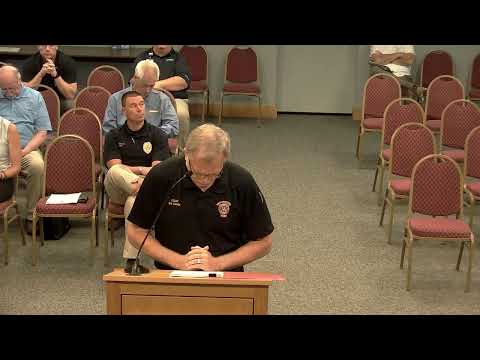
City staff told the Board of Directors the Hot Springs Police Department intends to submit two federal grant applications that would support officer wellness and targeted enforcement activities.
Sarah Delozier, the city grant writer, said, “The Hot Springs Police Department is intending to apply for funding through the 2025 law enforcement mental health and wellness act program administered by the US Department of Justice,” and described eligible uses including peer‑support models, annual mental‑health check‑ins, suicide‑prevention training and expanded family support resources. She said the department will apply for the program's maximum award of $200,000; the grant would be a zero‑match request and (if awarded) would fund a 24‑month project beginning Oct. 1, 2025.
Chief Harverton (Hot Springs Police Department) described Project Safe Neighborhoods funding administered by the Department of Justice’s Bureau of Justice Assistance and the Arkansas Department of Finance and Administration. He said the grant historically funds overtime, equipment, travel and training focused on violent crime, drug trafficking and weapons offenses and that HSPD has been a recurring participant. When asked about amount, Harverton said staff expected a window of roughly $20,000–$30,000 but had not finalized an exact figure.
Delozier said the 2025 wellness application incorporated feedback from a 2024 submission that was not awarded; staff revised narrative, budget and training timelines in response to reviewer comments. Harverton said the Project Safe Neighborhoods award has no local match and would be used primarily for overtime for special operations, training and possibly equipment.
Both grant applications were presented for consideration on the board's upcoming consent/agenda items.