Get Full Government Meeting Transcripts, Videos, & Alerts Forever!
Get email alerts on the Health Environment topic
No spam. Unsubscribe anytime.
Committee asks city for inventory of artificial turf fields and any PFAS information; agrees to follow-up study
Summary
After a committee discussion about microplastics and PFAS in artificial turf, members voted to request preliminary information from city staff on existing artificial fields, planned projects and any available material testing, and to explore a deeper analysis with local colleges.
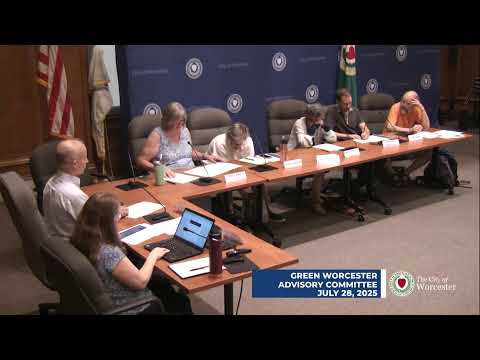
WORCESTER, Mass. (July 28, 2025) — Members of the Green Worcester Advisory Committee voted Monday to ask city staff for preliminary information about artificial turf fields in Worcester, any plans for new fields, and whether the city has data on PFAS (so-called "forever chemicals") or microplastic content in those installations.
Background: Committee member Ted Connor raised a story about a statewide effort to remove PFAS from materials used in artificial athletic fields and noted Worcester appears to have several artificial fields in the city. "I was hoping to get some kind of a report on what we actually know about that, what the city has, what it's building," Connor said.
Committee concerns: Members cited multiple potential harms: PFAS contamination, microplastics shedding, and lifecycle or climate impacts of synthetic turf. "There's also the problem of microplastics actually," committee member Steve McCauley said. Others noted artificial turf appears to be spreading beyond sports fields into other municipal landscaping.
Action and next steps: The committee voted to request preliminary information from staff for the next meeting: (1) an inventory of existing municipal artificial fields and other artificial turf installations; (2) any known plans or projects in development; and (3) what the city knows about materials (including PFAS) used in those fields. Staff said they would also reach out to local colleges and universities about a student project to do a fuller analysis of drivers, costs and policy options. A motion to add the item to the next agenda passed with no opposition.
Why this matters: Committee members said early information is needed to understand potential health, environmental and procurement policy implications and to assess whether the city should adopt stricter material standards.
Ending: Staff will return with a preliminary inventory and a proposed scope for a deeper analysis; the committee agreed to continue the discussion at a future meeting.