Get Full Government Meeting Transcripts, Videos, & Alerts Forever!
Get email alerts on the Housing Homelessness topic
No spam. Unsubscribe anytime.
Worcester council hears update request on tiny-home pilot for senior homelessness
Summary
Councilors and community supporters pressed the city manager for an update on a planned tiny-home demonstration on Claremont Street that backers say could provide lower-cost, accessible housing for older adults experiencing or at risk of homelessness.
Supporters of a proposed tiny-home pilot on Claremont Street urged the Worcester City Council on July 24 to move the project forward as a rapid, lower-cost option to help the city’s growing population of unhoused seniors.
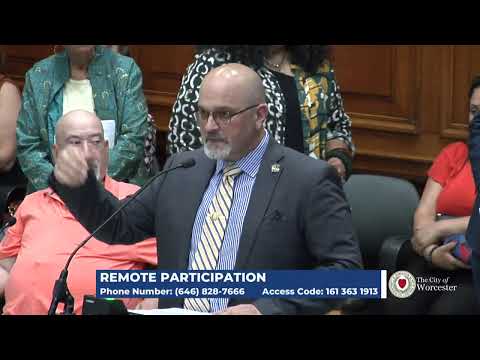
Sean Brennan, an architect and longtime Worcester resident, told the council the Claremont project would provide “safe, permanent, and cost-effective housing” in modular, ADA-accessible units that supporters say can be produced and installed much faster than traditional construction. “Each unit costs significantly less than conventional low-income housing approaches,” Brennan said.
At least a half-dozen speakers — including representatives from United Way and local housing nonprofits — described the project as a pilot that could demonstrate the modular approach and attract philanthropic, state and local partners. Tim Garvin of United Way said the organization had contributed $100,000 and fund-raising had brought the total raised closer to $600,000; he said organizers expect four tiny homes to be built for under $1 million and hoped for a grand opening in early October.
Former state legislative leaders and a state senator joined the panel to describe the problem of rising senior homelessness and to back the project’s potential to provide permanent supportive housing tied to case management and health services. A local nonprofit, Worcester Community Housing Resources, is listed as the proposed property owner in the public presentations, and OpenSky Community Services is identified by speakers as a planned service provider.
Councilors placed an order on the agenda asking the city manager to provide the council an update on “tiny home projects in the city, including such a project on Claremont Street.” That order passed on a unanimous roll call.
City staff and councilors said financing remains the immediate hurdle. The city manager noted the administration has worked with project proponents, housing agencies and potential funders; councilors asked whether Community Preservation Act or Affordable Housing Trust funding might be available and asked the administration to report on funding cycles and next steps.
Why it matters: speakers and several councilors framed the project as an experimental but potentially replicable response to a well-documented rise in homelessness among older adults in Worcester and statewide. Supporters said tiny, modular units paired with vouchers and supportive services could shorten the time people spend unsheltered and cost less than building comparable traditional housing.
The council’s instruction to the city manager asks for updates on project status, partners and funding and sets a short timeline for returning to the council with specifics.