Get Full Government Meeting Transcripts, Videos, & Alerts Forever!
Get email alerts on the Waste Management topic
No spam. Unsubscribe anytime.
Worcester waste study finds large share of food and organics; city rolls out 150 street recycling bins
Summary
City staff presented preliminary results from a waste characterization study showing food and other organics make up a large portion of the waste stream and recapped public workshops for the city's zero-waste master plan. The city also reported deployment of 150 dual-stream (WooBin) receptacles across busy corridors.
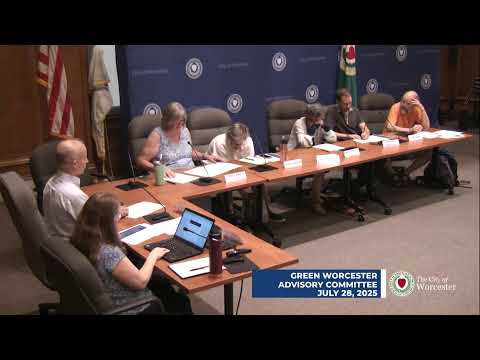
WORCESTER, Mass. (July 28, 2025) — City sustainability staff told the Green Worcester Advisory Committee on Monday that early results from a municipal waste characterization study show food and other organic material account for a large share of the local waste stream, and that the city is moving forward with outreach and new public recycling infrastructure.
The city collected 111 samples earlier this spring that were hand-sorted into 50 categories, Jesse Davis, Department of Sustainability & Resilience (DSR) staff, told the committee. "We had over 50 people participate overall," Davis said of recent zero-waste workshops, and he described the waste study as the first of its kind for Worcester. "Food and other organics represent over 50% of the total of the pie," he said, identifying food diversion as a major opportunity for cost savings and composting programs.
Why this matters: City staff and the committee said the findings could affect imminent contract decisions and add urgency to planning for composting and organics diversion. Davis told the committee the timing is helpful because contracts that govern disposal and collection will be revisited in coming years.
Details and next steps: The initial sort focused on waste collected from single-family and small multiunit buildings (one-to-six units). Davis said 7-plus-unit buildings use private waste haulers and show different composition patterns with relatively more recyclable material and fewer organics. Preliminary school and commercial samples showed similarly high shares of food and organics; Davis said the final report is expected in September and will include deeper subcategory analysis.
Committee members pressed staff about the financial case for diversion. "What is the tipping fee and how much money could be saved from that?" asked committee member Steve McCauley. Davis said staff has asked the city's consultant to quantify disposal costs and potential savings and that the answers will be folded into planning because the information could support short- and long-term program choices.
Public workshops and outreach: Davis and DSR staff recapped two public workshops (one online, one at the senior center) and a resident survey conducted in spring. Workshops included small-group discussions on what is working, visions for a zero-waste Worcester, and a voting activity on policies, programs and infrastructure. The next public workshop is scheduled for Sept. 17 at the Worcester Public Library.
Street recycling rollout: John (DSR staff) updated the committee on the WooBins dual-stream public recycling bins. A pilot of 30 bins was completed and the city is deploying an additional 120 for a total of 150. "The first wave of 50 some odd have already been deployed. And the next are going to be going out, on August 1," John said. Early monitoring shows low contamination in the new bins; staff said they will animate bins with artwork from local artists and may relocate underused units to improve coverage.
What was not decided: The committee did not adopt new policy at Monday's meeting; staff requested time to complete the study and analysis before proposing programmatic changes.
What to watch: The final waste characterization report due in September, the Sept. 17 workshop at the library, and the consultant's estimate of disposal cost savings tied to organics diversion.
Ending: Staff asked the committee and the public to provide feedback on WooBin locations and to attend the fall workshops as the zero-waste plan moves into a detailed policy and program phase.