Get Full Government Meeting Transcripts, Videos, & Alerts Forever!
Get email alerts on the Public Engagement Survey topic
No spam. Unsubscribe anytime.
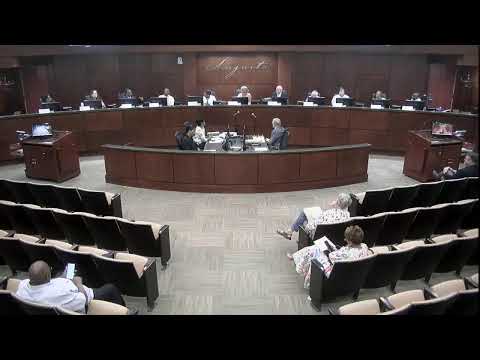
Charter-review committee outlines public hearings and plans online and paper survey
Summary
The committee scheduled three public hearings and debated how to run a public survey — issues included anonymity, email collection, paper distribution, reach to seniors and timing for a snapshot of results before hearings.
The Augusta Charter Review Committee outlined plans for three public hearings in July and discussed a public survey to gather resident input on the county charter, with debate over anonymity, distribution and the time allowed for paper responses.
The committee announced planned public hearings for Monday, July 7, at Warren Road Community Center; Tuesday, July 8, at Diamond Lakes; and an attempt to schedule a July 10 session (venues pending). Carl Vinson Institute representative Rex Facer presented a draft online survey and described the proposed questions and data collection: “We then asked them, yeah, what works, yeah, well with, the Augusta Richmond, you know, county government. We asked them what doesn't work well,” Facer said, describing open‑ended questions intended to capture where residents feel the charter is succeeding or failing.
Why it matters: committee members emphasized broad outreach, noting many residents have not read the charter and that reliance on online distribution risks missing seniors and residents without broadband. Sheffey Robinson urged caution to avoid polarizing questions and to provide paper options at community centers and hearings: “I do not want to have this committee go down in history as not listening to the people because we're trying to push agendas,” she said.
Survey design and privacy: members debated whether to collect email addresses to prevent duplicate responses, then remove them for privacy. Facer said the team could remove emails before sharing results. Members asked whether tracking cookies could be used instead; Facer said they would check software limits maintained by the university. Committee members and staff discussed providing paper copies at public hearings, libraries, the mall and community centers and possibly using interns or community center staff to collect completed forms.
Timing and snapshots: committee members proposed different collection windows. Some members preferred a 15-day (two-week) paper window to avoid delaying work; others recommended 30 days to reach monthly neighborhood meetings and seniors who attend centers infrequently. Rex Facer recommended taking periodic "snapshots" of online results; he said a snapshot date of July 1 would be feasible and would allow the committee to have preliminary results for the July 7 community hearing. One committee member suggested using the digital data to shape hearings and to set a paper-return deadline of July 31 to allow additional time for in-person responses.
Next steps: Carl Vinson Institute will finalize the digital survey for posting through staff channels and confirm technical options for preventing duplicate responses while protecting participant anonymity. The committee directed staff to post notices and distribute paper copies at hearings and community centers; the committee also set a near-term meeting on Wednesday, June 25, to continue planning.
Ending: Members urged active outreach beyond social media, including using television, newspapers and neighborhood meetings to reach residents who might not see online notices.