Get Full Government Meeting Transcripts, Videos, & Alerts Forever!
Get email alerts on the Governance Bylaws topic
No spam. Unsubscribe anytime.
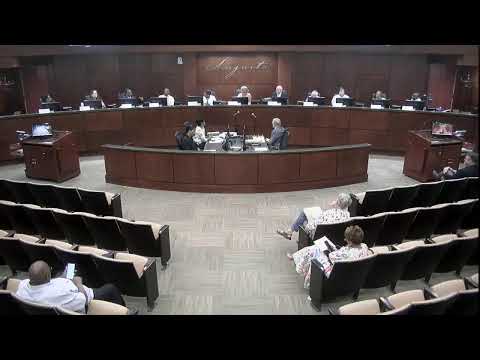
Augusta charter-review committee adopts bylaws, debates meeting language and subcommittee cadence
Summary
The Augusta Charter Review Committee voted to adopt bylaws and policies, removed anticipatory charter language and approved a schedule for subcommittee meetings after debate over wording, call‑in voting and meeting sequencing.
The Augusta Charter Review Committee on an administrative vote adopted bylaws and committee procedures and approved a recurring subcommittee schedule after members debated minutes wording, remote voting rules and how to avoid confusing the public with shifting meeting times.
Committee members began the business portion of the meeting by considering edits to draft minutes and a request to change the phrase "red line" to "strike through," with one member noting the term carries “a negative connotation with certain communities.” The committee then moved to adopt the bylaws; the motion to adopt the bylaws was made by Tanya Barnhill Turnley and was approved by the committee. The committee later voted to adopt the committee’s policies and procedures and to remove anticipatory language from the existing charter.
Why it matters: the bylaws and procedures set how the committee takes testimony, meets in public and coordinates subcommittees. Members pressed for clear, consistent scheduling and for preserving the committee’s ability to enforce attendance rules.
Most important facts: the committee approved the bylaws after discussion about meeting cadence and attendance. The clerk read a roll call on the bylaws vote and the chair announced the motion carried 10 to 1 with Lonnie Wimberly voting no. The policies and procedures were adopted unanimously. The committee also voted unanimously to strike anticipatory language identified by the Carl Vinson Institute.
Members questioned whether the minutes should be retroactively altered to replace the term "red line"; one member, who noted the term is a standard legal drafting phrase, argued “red line is a legal term” used to indicate official changes. Others said that, while the record should reflect what occurred, the committee could adopt more sensitive phrasing going forward.
Discussion also focused on remote voting and attendance. General counsel said there must be a majority of the commission present for a lawful meeting and described limits on remote voting for members outside the jurisdiction and for medical reasons; he noted a charter-review ordinance permits removal for missing more than three consecutive meetings. The committee discussed whether to allow call‑in votes and how often members may do so.
After extended discussion about how to schedule subcommittee meetings so the public can attend, the committee approved a motion that, moving forward, one subcommittee will meet following every other main committee meeting (a substitute motion brought by a committee member and seconded by Lee Powell). The chair instructed the clerk and the chair to coordinate room assignments and times to minimize public confusion and staffing conflicts.
The committee set its next full meeting for Wednesday, June 25, at 10 a.m., and directed staff to coordinate public notices and room reservations.
Ending: Committee members said they will publish clearer meeting notices to avoid confusion when seating or audiovisual arrangements change, and the clerk agreed to add explanatory language to the minutes about on‑screen attendance markers when seating order shifts.