Get Full Government Meeting Transcripts, Videos, & Alerts Forever!
Get email alerts on the Staffing Budget topic
No spam. Unsubscribe anytime.
Plumas County behavioral health warns of staffing shortages, wage limits and underused Greenville clinic space
Summary
County behavioral health staff reported a substantial budget shortfall driven by falling Medi‑Cal revenue and therapist shortages. Commissioners discussed recruitment, a planned county salary review and whether to continue paying $14,000/year for underused Greenville office space.
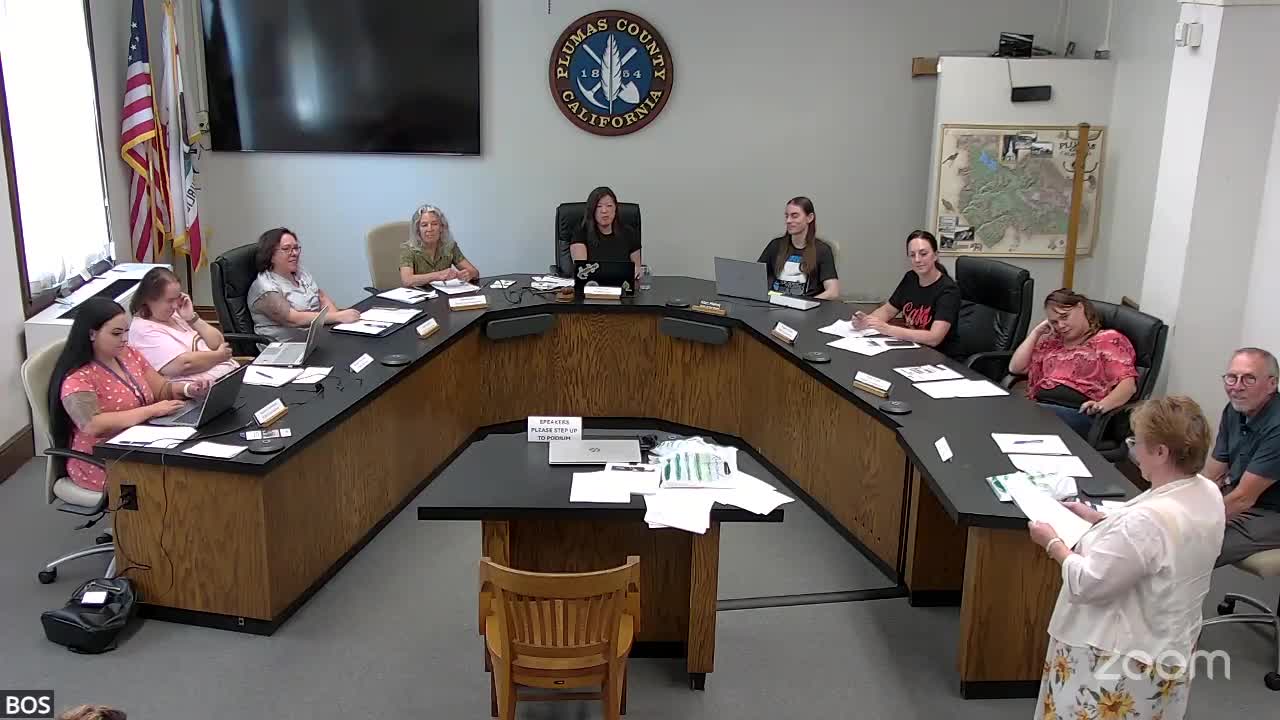
Plumas County behavioral health staff reported June 11 that the department faces a growing fiscal gap driven by lower Medi‑Cal revenue and a shortage of clinicians, and commissioners discussed recruitment, wage adjustments and whether to retain underused office space in Greenville.
Director‑level staff said the department is expanding services faster than revenue is increasing, citing reduced Medi‑Cal billing effectiveness in small counties and fewer billable clinicians. “We are expanding more than we are bringing in in revenue,” a staff speaker said; commissioners referenced a publicly available budget shortfall figure in the county’s OpenGov system.
Staffing and wages: Commissioners and staff emphasized that low county wages make recruitment difficult. A county supervisor present noted the board is working on a comprehensive salary survey and referenced state law (SB 525) requiring minimum wages for health care workers; staff said salary revisions are planned in the near term to improve recruitment and retention.
Greenville clinic space: Staff reported that since opening limited clinic hours at a rented Greenville office in September 2023, in‑office utilization has been minimal: roughly five in‑office visits since the space opened, while case management and telehealth services continued. The rent was reported as about $150 per day, adding up to roughly $14,000 per year; commissioners discussed alternatives such as using community sites (library, community center, Roundhouse Council) for occasional in‑person visits.
Contracts and cost drivers: Staff said several external contracts help provide services (telehealth therapists from a contractor, after‑hours psychiatric coverage), but those contracts are expensive and will remain necessary until the county can hire enough clinicians to absorb work internally. Commissioners said some contract work is currently required to meet regulatory and QA obligations.
Why it matters: The department’s ability to recruit and retain clinicians affects access to services across the county and the pace at which the county can reduce reliance on costly contracts. Commissioners directed staff to continue work on wage adjustments and to explore lower‑cost community locations before renewing or maintaining underused lease space.
Ending: Staff said they will continue recruitment efforts, pursue the county wage review outcomes and return with recommendations about the Greenville office lease and options for using community partner spaces.