Get Full Government Meeting Transcripts, Videos, & Alerts Forever!
Get email alerts on the Land Use Regulation topic
No spam. Unsubscribe anytime.
Council introduces amendments to managed co‑owned housing rules, clears first reading
Summary
Council introduced and conducted reading of an ordinance amending Chapter 5.92 to tighten and clarify rules for managed co‑owned (fractional) housing units: daytime occupancy will mirror vacation‑rental rules, the three‑year automatic cap removal will be replaced with council action, median price references are limited to single‑family sales and
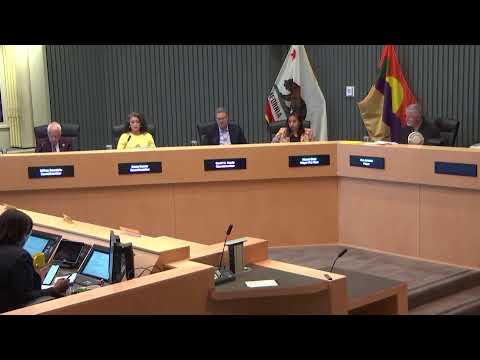
The City Council introduced and conducted the reading of an ordinance amending Chapter 5.92 of the Palm Springs Municipal Code to further regulate ‘managed co‑owned housing units’ (fractional or co‑ownership arrangements that make a single dwelling available to multiple parties). Veronica Goodhart and city attorneys summarized the amendments requested by council last year and two additional clarifications staff identified during implementation.
Key changes in the proposed ordinance - Term/cap: the ordinance removes the previous automatic three‑year termination for the 30‑home cap and replaces it with a requirement that any change or removal of the cap occur only by affirmative council action; the council also retained intent to review the cap within three years. - Daytime occupancy limits: daytime guest/occupant limits will be the same as the city’s vacation‑rental ordinance (two persons per bedroom plus minors 12 and under, plus up to four additional daytime occupants) so co‑owned units and short‑term units follow the same occupancy standard. - Median price definition: the ordinance clarifies that the “median housing price” metric used in eligibility calculations refers specifically to single‑family home sales (not condominiums or other multi‑family units). - Application requirements: the permit application will mirror the vacation‑rental application in required documentation (government‑issued IDs of owners, corporate/trust documents when properties are held by entities, and similar verification steps). - Enforcement/appeals: the ordinance keeps enforcement language consistent with existing short‑term rental practice, including citation and permit suspension language subject to appeal.
Process and council action Veronica Goodhart reported staff had just received five applications from operators in the category and was reviewing them. Council discussed whether to require a completion deadline for those first applications; staff recommended allowing time to vet materials and suggested 30 days to complete staff review once the applications are complete. Councilmember Grama moved the ordinance forward incorporating Councilmember Bernstein’s suggested language on automatic revocation/appeals; the motion carried and staff will prepare the final ordinance for adoption at a future hearing.
Why it matters The amendments close implementation gaps staff found while operationalizing the earlier ordinance and align co‑owned rules with existing short‑term‑rental standards so enforcement and occupancy rules are consistent across uses. The clarifications also limit the median sale price calculation to single‑family homes to avoid cross‑category distortions.
Next steps Staff will continue processing the five pending applications, schedule inspections once they are complete and return the ordinance for the adoption hearing with any needed technical edits. Permit revocations and enforcement will follow the city’s established short‑term‑rental citation and appeal process.