Get Full Government Meeting Transcripts, Videos, & Alerts Forever!
Get email alerts on the Municipal Budgeting topic
No spam. Unsubscribe anytime.
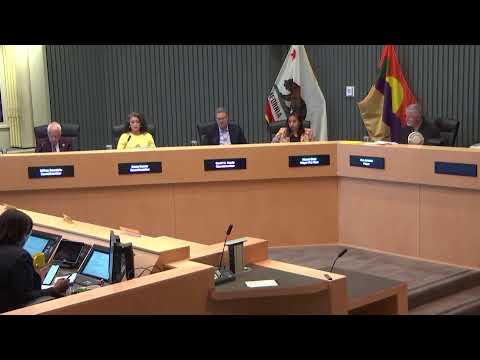
Palm Springs staff present $519 million biennial budget; council grills plan to shore up $1.3M FY26, $8.5M FY27 gaps
Summary
City Manager Scott Stiles and Finance Director Christopher Mooney presented a $519 million biennial budget for FY2026–27 that includes public‑safety hires, a $15 million library renovation phase and airport modernization projects, while warning of an operating gap of about $1.3 million in FY26 and $8.5 million in FY27 if near‑term adjustments are not adopted.
City Manager Scott Stiles and Finance Director Christopher (Chris) Mooney presented a biennial budget package on Wednesday that proposes a $519 million all‑funds plan for fiscal years 2025–26 and 2026–27 and a $173.4 million general fund operating budget for FY26 (rising to $182.3 million in FY27). Stiles called the package “advancing in uncertain times,” emphasizing investments in public safety, facilities and housing while warning the council the plan still shows an operating gap of roughly $1.3 million in FY26 and $8.5 million in FY27 if no additional adjustments are approved.
The nut of staff’s fix-it plan is a mix of one‑time fixes and operational controls intended to protect reserve balances while the city pursues revenue growth. Finance Director Chris Mooney told the council the city will make a $29 million lump‑sum payment to CalPERS (the California Public Employees’ Retirement System) to reduce the unfunded liability and that actuarial adjustments should produce an immediate roughly $2 million annual budget benefit. Mooney also described a package of near‑term proposals to reduce FY26 pressure: up to $5 million of Measure J funds to cover deferred maintenance or vehicle purchases, temporarily moving six public‑safety positions currently paid by the general fund into public‑safety–dedicated funds (saving about $1.2 million in FY26), and pausing a portion of the annual CalPERS reserve contribution from $6 million to $1 million (a $5 million FY26 saving). Mooney said those moves are intended as one‑time relief to bridge the city to FY28, when staff hopes higher revenues or structural expense reductions will restore balance.
Why it matters: the city has sizable capital and operating commitments — a $15 million library renovation budget phase, an airport modernization program and multiple bridge, street and park projects — but revenue growth is uncertain. Mooney warned that without action the general fund’s unassigned balance could fall rapidly; with no changes it would drop from about $54 million to $21 million by the end of FY27. “If you extend this into FY28 that $21 million becomes zero,” Mooney said, adding that protecting reserves is a priority for credit ratings and any planned debt issuance for fire stations or a convention-center project.
Major budget items and staff proposals - Public safety: the budget adds three sworn police officer positions and three firefighter/EMT positions across the two years to complete a previously directed staffing plan; staff also budgeted facility upgrades including a $3 million firearms‑training facility refurbishment and $20–25 million estimated for a new District 1 fire station. The administration proposed shifting some public‑safety personnel costs into safety‑dedicated funds for one year to ease FY26 general‑fund pressure. - Library renovation and temporary lease: the city is budgeting roughly $15 million to renovate the main library; staff proposed a three‑year temporary lease for a storefront location while construction occurs and will coordinate services across community partners to maintain access (see separate article on the library item). - Airport modernization: the budget carries airport capital including baggage‑handling system design and other terminal upgrades driven by the airport master plan; airport staff reported record passenger volumes (about 3.2–3.3 million annual passengers) and expect non‑aeronautical revenue growth from new food and retail concessions. - Deferred maintenance, vehicles and Measure J: staff recommended using Measure J (the city’s infrastructure/special projects fund) for some deferred maintenance and some vehicle purchases to relieve the general fund. Two scenarios presented would move between $5 million and $8.5 million of near‑term expense to Measure J (or have Measure J directly fund projects) to preserve general‑fund cash flow. - Affordable housing and one‑time set‑asides: the budget leaves in place $2.9 million for the Desert Highlands single‑family affordable housing project and contemplates funding for potential future projects including a Gene Autry site (developers’ requests that surfaced in the staff presentations ranged up to an $8 million local subsidy request in proposals). Housing Director Jay Verrada told the council staff has a pipeline of developer proposals and that subsidy requests and timing vary by project. - Homeless services/navigation center: staff noted the city will be responsible for approximately $5 million annually in operations once state/county grant support for the navigation center ends; city officials urged aggressive pursuit of ongoing O&M grant funding. - Grants and pipeline funding: Assistant City Manager Teresa Galavan and staff reported roughly $9.7 million in pending grant funding across multiple applications but cautioned that staff do not budget grant revenue until awards are certain. - Vacancy savings and hiring controls: the budget assumes roughly $4.6 million in vacancy savings in FY26 (staff reported about 66 current vacancies citywide). Staff said it will implement a soft hiring freeze on non‑sworn general‑fund positions following adoption and may tighten if revenues underperform. - Fleet and outsourcing: public comment and staff discussion flagged the fleet maintenance and vehicle replacement program. Public Works Director David Maccabee said outsourcing fleet maintenance could yield an estimated $1.4 million annual savings under a contractor model; staff said a full analysis and a formal report to council would follow before any decision.
Council reaction and next steps Councilmembers pressed staff to protect affordable‑housing commitments and public‑safety staffing while finding savings elsewhere. Councilmember Bernstein said she supports retaining the affordable‑housing program and urged an aggressive economic‑development strategy to generate growth, arguing a modest increase to economic‑development funding would have high return. Councilmember Garner and Councilmember Reddy raised similar points about protecting reserves while pursuing grant funding and tighter cost control.
City Manager Scott Stiles and the finance team said staff will return with refined recommendations: the engineering team will finish bid reviews and timeline details for library construction and a recommendation on Measure J allocations is expected in the follow‑up meeting cycle; Mooney said a complete set of budget resolutions and the updated budget book will be presented to council at the June 20 budget hearing and the city expects to adopt the budget before the July 1 statutorily required deadline.
What remains unresolved: council members did not finalize which Measure J projects to shift, whether to pause all or part of the annual CalPERS reserve contribution, or whether to increase economic‑development funding before more data is available. Staff committed to bringing specific project lists and fund‑transfer proposals back to the council for action.
Documents and evidence: staff presented a 300‑page budget book and supporting slides, and board/commission funding proposals were discussed during the presentation. Staff will post updated budget materials and the detailed CIP lists before the June 20 hearing.
Ending: Council set a schedule for return briefings. Staff will return with final budget adoption materials and the recommended set of one‑time adjustments on June 20. Councilmembers asked for quarterly financial reviews after adoption to monitor revenue and vacancy trends.