
Board counsel: new RFP likely safer than change order for athletic complex; ownership of $175,000 drawings unclear
Get AI-powered insights, summaries, and transcripts
Subscribe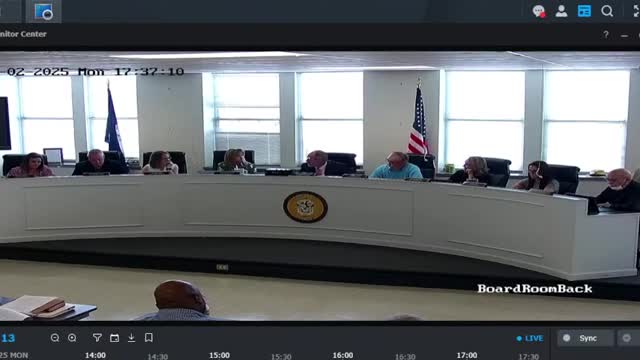
Summary
Halifax County School Board legal counsel told members on a governance work session that adding an athletic complex to the existing high‑school contract by change order is a close legal call and that issuing a new request for proposals (RFP) would be the more conservative approach.
Halifax County School Board legal counsel told members on a governance work session that adding an athletic complex to the existing high‑school contract by change order is a close legal call and that issuing a new request for proposals (RFP) would be the more conservative approach.
The counsel said the question is whether stadiums, arenas and fields are a modification of the original building contract or constitute a new project requiring a new procurement. “I would be inclined to hear more about why the board would want to do this,” the counsel said, adding that the government‑contracts guidance they received was “fairly gray.”
The distinction matters because procurement statutes are designed to promote competition and to ensure the district gets low bids; if the district proceeds by change order and a disappointed bidder challenges the award in court, the district could be required to re‑procure the work. The counsel summarized the risk plainly: a challenge could force the district to “do it again and do it correctly.”
Board members and staff described two practical constraints. First, the architect selected for the high‑school work, Graham Parker, prepared drawings that were paid for in late 2023 but — according to discussion during the meeting — the board did not finalize a change‑order contract with the architect, so the district does not have completed ownership of those drawings. A board member said the $175,000 payment for renderings was approved in November 2023 but the formal amendment with the architect was never signed; counsel confirmed that, without the contractual completion, the district lacks full ownership rights to the drawings.
Second, multiple participants said many companies that bid the renovation work wanted to see drawings on‑site; the panel noted that the drawings the district currently has were prepared for new construction and cannot be reused for a renovation RFP unless the district stays with the same architecture/construction teams. Members discussed two procurement routes: (1) hire an architect and then advertise contractors (traditional design‑bid‑build), or (2) use a design‑build procurement in which a single firm proposes design and price together.
Several board members emphasized potential cost savings from continuing with on‑site firms that are already mobilized; others warned that price escalation is occurring and delaying the work increases costs. The counsel said staying within the same contracting structure (for example, keeping the existing construction manager) reduces but does not eliminate legal risk.
No formal motion to award or amend a contract for the athletic facilities was made at the meeting. Board members directed staff and the construction manager to obtain updated cost estimates and to bring a deeper analysis back to the board for a future meeting.
The board also asked staff to clarify which drawings the district may lawfully reuse and whether finalizing the architect amendment would transfer ownership of the renderings to the district. Those follow‑up items were set for review at a subsequent meeting.