Get Full Government Meeting Transcripts, Videos, & Alerts Forever!
Get email alerts on the Child Welfare topic
No spam. Unsubscribe anytime.
Oregon legislature expands foster children—s rights, shortens notice timeline
Summary
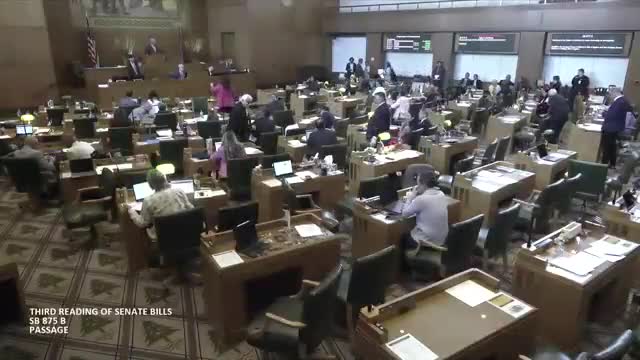
The House passed Senate Bill 8 75 B to add protections for foster youth, shorten the time to receive a written statement of rights and strengthen sibling-contact rules after committee amendments removed a religious-activity opt-out provision.
Senate Bill 8 75 B cleared the House after lawmakers adopted committee amendments intended to preserve both foster children—s rights and foster family religious-liberty concerns.
The measure updates the Oregon Foster Children—s Bill of Rights and the Foster Children—s Sibling Bill of Rights to add protections—such as prohibitions on abuse, neglect, exploitation and inappropriate restraint—requires a rights document be provided within seven days instead of 60, and strengthens rules to keep siblings connected during placements.
Representative Andrea Hartman, the bill—s carrier in the House, said the changes aim to give children in care greater stability and clearer information. "This bill changes and places an emphasis on some very important areas. Areas that foster children themselves have asked us to add to their foster care bill of rights," Hartman said on the House floor. Co-carrier Representative Scharf said the bill incorporates longstanding protections under state rule and statute while responding to foster youth requests for more clarity and practical protections.
The House debate included concern from Representative Sanchez about the removal, in a committee amendment, of a provision allowing children to decline participation in religious events not aligned with their own beliefs. Sanchez said she was troubled that the amended bill could leave Native children and others feeling required to participate in religious practices that are not their own. Hartman and Scharf said the amendment was adopted to avoid creating legal conflicts with foster-parent religious-rights claims and to preserve the broad bill so DHS and stakeholders can implement protections thoughtfully.
Representative Scharf reviewed existing statutory and rule protections, noting ORS-based placement guidance and DHS administrative rules require efforts to match children with families that are consistent with the child—s religious and cultural background. "By rule, there are two other protections for foster care children ... A foster provider must recognize, encourage, and support the religious beliefs, ethnic heritage, cultural identity, and language of a child in their family care," Scharf said.
House members stressed the bill—s immediate provisions: it shortens the timeframe for providing written rights information to foster children, clarifies sibling-notification requirements and expands the definition of who qualifies as a foster child for the rights documents. Supporters said the changes respond to requests from youth who have experienced the system; opponents urged additional protections for cultural and religious self-determination and noted a pending federal appeals court landscape that could affect implementation.
Those recorded voting in favor during the roll call as read on the floor included Representative Boyce, Representative Evans, Representative Marsh, Representative Valderrama and Representative Nose. The clerk declared Senate Bill 8 75 B passed.
The measure will return to the Senate for concurrence on amendments and for final enrollment before becoming law. Advocates, DHS and legislative staff said they will continue interim work to refine implementation language, particularly around religious and cultural accommodations for children.