Get Full Government Meeting Transcripts, Videos, & Alerts Forever!
Get email alerts on the Artificial Intelligence Policy topic
No spam. Unsubscribe anytime.
Joint committee advances bill to establish Oregon commission on artificial intelligence
Summary
The Joint Legislative Committee on Information Management and Technology on June 11 adopted an amendment and voted to send House Bill 3592, which would establish a state commission on artificial intelligence, to the Joint Committee on Ways and Means without recommendation.
The Joint Legislative Committee on Information Management and Technology on June 11 adopted an amendment and voted to send House Bill 3592, which would establish a state commission on artificial intelligence, to the Joint Committee on Ways and Means without recommendation.
The bill, introduced in its original form as the Oregon Commission on Artificial Intelligence, would create a statewide body to monitor use of artificial intelligence technologies, identify long‑term policy implications, and file an annual report to the Legislative Assembly that "may include recommendations for legislation, regulations, or policies." The adopted dash‑5 amendment renames the body the Senator Aaron Woods Commission on Artificial Intelligence, places it within the Oregon Department of Justice and makes several structural changes, including the addition of one member to bring the total to 18 and shifting hiring authority for a chief artificial intelligence officer to the Attorney General.
Committee members said the measure is intended both to honor the late Senator Aaron Woods and to give Oregon a single, ongoing resource to study and recommend policy on AI. "This commission serves as a long term commitment to lifting up the benefits and mitigating the potential harms of AI," said Representative Wynne, the bill sponsor. Several members also raised procedural and structural questions about where the commission should be housed and how its staffing and reporting relationships would interact with existing state IT leadership.
Key provisions in the committee discussion and the dash‑5 amendment included: the commission name change to honor Senator Aaron Woods; establishment of the commission within the Oregon Department of Justice instead of the Department of Administrative Services; an increase in membership from 17 to 18 (described in committee as 14 voting and 4 nonvoting members); making the president of the Senate and the speaker of the House the appointing authorities for the majority of voting members (12 appointed by legislative leaders, two voting members appointed by the governor); adding a nonvoting member slot for the chief justice of the Oregon Supreme Court or the justice's designee; shifting authority to appoint and employ a chief artificial intelligence officer to the Attorney General; and authorizing the Oregon Department of Justice to charge assessments to recover costs for services provided to state or local agencies related to AI. The bill also includes a general fund appropriation described in committee as a "yet to be determined amount" that may be used to hire full‑time employees to support the chief AI officer.
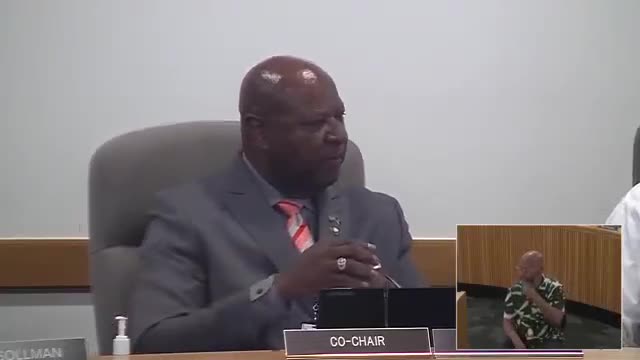
Committee debate mixed statements of support for moving the measure forward with procedural caution. Co Chair Manning explained why she moved the bill "without recommendation," saying she was concerned about unresolved details, including whether the Department of Justice is the appropriate home for a long‑term commission and how a chief AI officer would relate to the state chief information officer. Representative Wynne and other supporters said they expected additional fiscal analysis and opportunities to refine structure as the bill moves to Ways and Means. Senator Solman warned of possible federal actions that could affect state AI policy but argued for continued state engagement.
Two formal committee actions were recorded. The committee adopted the dash‑5 amendment by roll call; later it voted to report House Bill 3592 as amended to the Joint Committee on Ways and Means "without recommendation." Roll call on the report‑out showed the committee recorded votes of yes/aye from Representative Winn, Representative Edwards, Co Chair Nathanson, Co Chair Manning and Senator Solman; Senator Robinson was listed as excused.
Members and staff noted fiscal details remain unresolved. Committee staff said a fiscal "light" had been issued because agencies had limited time to provide full fiscal information; additional analysis, particularly from the Department of Justice, is expected during the Ways and Means review. Multiple members said sending the bill on to Ways and Means preserves momentum while allowing further work on outstanding structural and budget questions.
The committee closed the work session on House Bill 3592 and moved immediately into a brief informational meeting on other technology topics.