Get Full Government Meeting Transcripts, Videos, & Alerts Forever!
Get email alerts on the Municipal Finance Bond topic
No spam. Unsubscribe anytime.
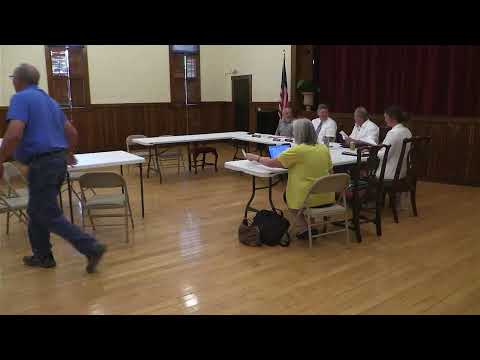
West Swanzey trustees debate cutting fire-station bond after lower bid
Summary
Trustees discussed reducing a previously authorized $2.5 million bond for a planned fire station after bids came in lower than the $3.5 million voters approved; trustees weighed returning savings to taxpayers, using Invest NH and congressionally directed funds, and the risk of overbonding.
The Town of West Swanzey trustees debated whether to reduce a previously authorized $2.5 million bond for a planned fire station after bids came in substantially below the $3.5 million voters approved at the March town meeting.
Trustees opened the discussion by noting voters had approved a $3.5 million warrant article for the station. After the town’s request for proposals, the successful bidder produced an estimate that lowered the expected construction cost to about $2.8 million and led trustees to authorize a $2.5 million bond instead of the full $2.8 million that had been available.
The discussion focused on three options: keep the $2.5 million authorization, cut the authorization further (one trustee floated $2.0 million), or leave the larger authorization to protect against rising costs. Trustees said there are additional funding sources that could cover parts of the project, including leftover Invest NH funds (discussed as about $433,000) and a congressionally directed $200,000 award referenced as originating from Senator Shaheed’s office. The extent to which those funds are available for this project and the timing of architectural and engineering bills were central points of debate.
Trustees raised several risks to reducing the bond now. One trustee warned that overbonding—issuing more bond authorization than will be spent—can conflict with the rules that limit the use of bond proceeds and could lead to tax or legal complications if proceeds are used for purposes other than the approved project. Another trustee said the town is paying interest on bond proceeds and that holding excess proceeds for an extended period increases borrowing costs compared with keeping funds in reserves or returning savings to taxpayers.
Several trustees said tariffs, supply-chain delays and potential winter-cost increases remain uncertain and argued that leaving the $2.5 million authorization in place would protect against cost escalation while work on architectural and engineering plans continues. Others argued that the lower bid is a taxpayer savings and that reducing the bond now would lower debt service sooner rather than carrying debt longer than necessary.
Trustees also discussed timing: architectural work and engineering schedules were described as not yet complete, with one timeline point given as August 1 for part of the architectural schedule. That timing factor influenced several trustees who said a conservative approach might be warranted until plans and contracts are finalized.
No final vote or binding decision was recorded in the discussion. Trustees discussed wording for a motion to authorize a $2.0 million bond in place of the current authorization, and staff indicated a motion draft would be prepared, but the transcript does not record a final vote on any change from the $2.5 million authorization.
Why this matters: The trustees’ choice affects when and how much the town borrows, who pays debt service and whether available grant or Invest NH funds are applied to the build now or kept for later infrastructure needs. Trustees said the question balances short-term taxpayer relief against the risk of cost increases and restrictions on how bond proceeds can be spent.