Get Full Government Meeting Transcripts, Videos, & Alerts Forever!
Get email alerts on the Accessible Housing topic
No spam. Unsubscribe anytime.
Lawmakers Hear Yearslong Push to Require More Adaptable Housing for Seniors and People with Disabilities
Summary
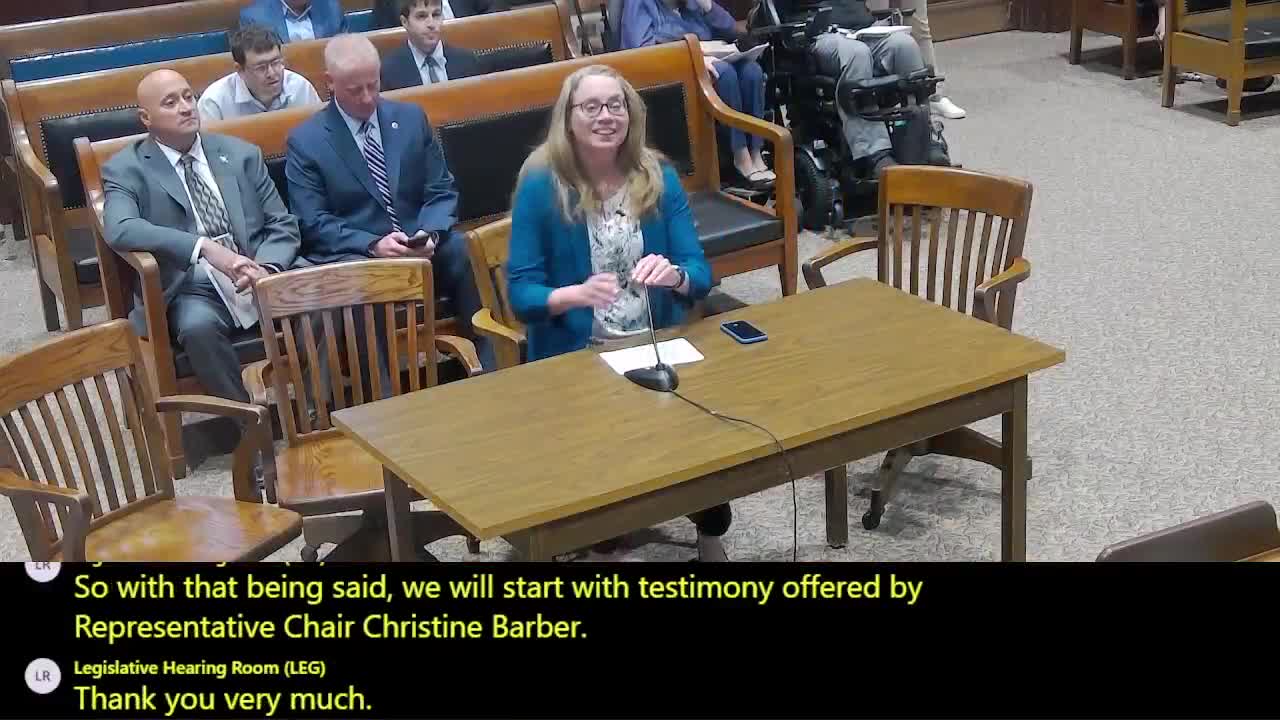
Members of the Joint Committee on Public Safety and Homeland Security heard more than an hour of testimony on Oct. 11 in support of House Bill 2569, which would expand the Architectural Access Board’s authority to require adaptable housing features in rehabilitated buildings and certain workplaces.
Members of the Joint Committee on Public Safety and Homeland Security heard more than an hour of testimony on Oct. 11 in support of House Bill 2569, which would expand the Architectural Access Board’s authority to require adaptable housing features in rehabs and add workplace employee areas to the board’s jurisdiction.
Advocates said the change would make many rehabilitated units and converted buildings usable for people who use wheelchairs or have other mobility needs. "This bill is absolutely crucial to making housing more accessible to people with disabilities," said R Feynman, director of advocacy at the Disability Policy Consortium, in remarks to the committee.
The bill would require that when buildings are rehabilitated they be made "accessible and adaptable," witnesses said, and would extend similar requirements to employee areas in workplaces so people with disabilities can access employment. Testimony detailed the tight supply of affordable, accessible housing: "In 2024, the average one‑bedroom rent in Massachusetts was 182% higher than the maximum SSI payment," Amber Patel, a lifelong wheelchair user and member of the Massachusetts Developmental Disabilities Council, told the committee.
Advocates rooted support in personal accounts. Benji Kemper of the Center for Living and Working described residents who cannot use the bathroom in their own apartments because doorways are too narrow. James Miller, a self‑advocate who said he recently had to move in with family because he could not find an affordable, accessible unit, told the committee his Social Security checks would not cover typical rents.
Supporters said adaptable units are a cost‑effective step in many rehabilitations because they can be incorporated during gut rehabs. "It doesn't cost any more money because they're gutting the building anyway," said Chris Ho, a member of Dignity Alliance Massachusetts, citing developers who build in older mill and gateway-city buildings.
Several witnesses described the Architectural Access Board’s current gaps: it lacks jurisdiction over employee‑only areas and over certain pre‑1991 buildings converted to housing, they said. Carol Steinberg, a longtime member of the Architectural Access Board, said those two gaps are central to the bill: "This legislation will correct those two holes in the jurisdiction of the Architectural Access Board — employee‑only spaces and pre‑1991 buildings converted into housing." She urged the committee to act, noting prior years' near‑misses and concerns about federal regulatory changes.
Committee members asked few technical questions during the packed testimony period. Witnesses offered to provide fact sheets and data and asked the committee to prioritize the bill this session. The testimony combined lived experience and policy detail: advocates requested that architects and building inspectors be required to collaborate with disability advocacy groups when standards are prepared for the board, a provision included in witnesses' written materials.
The committee did not take a vote during the hearing. Advocates said they would continue working with lawmakers to move the bill forward and noted past progress — including previous favorable reports from committees and an amendment to a housing bond bill in an earlier session that did not survive final passage.
Why it matters: Witnesses said more adaptable units could prevent institutionalization and homelessness, increase independence and reduce health complications for people with disabilities and seniors. They urged the committee to act to ensure that future housing and rehabilitated units serve an aging population and people with disabilities throughout Massachusetts.
Speakers quoted in this article spoke during testimony on House Bill 2569 and are listed in the source list below.