Get Full Government Meeting Transcripts, Videos, & Alerts Forever!
Get email alerts on the Epinephrine Access topic
No spam. Unsubscribe anytime.
Families, health advocates press lawmakers to expand public access to epinephrine
Summary
Witnesses told the committee that H.2500 would allow public entities and trained employees to maintain undesignated stock epinephrine in public places; several family members urged passage after a preventable death during anaphylaxis at a golf tournament.
Multiple witnesses urged the Joint Committee on Public Health to pass H.2500 to expand public access to epinephrine autoinjectors and provide legal protections for trained staff and volunteers to administer stock epinephrine.
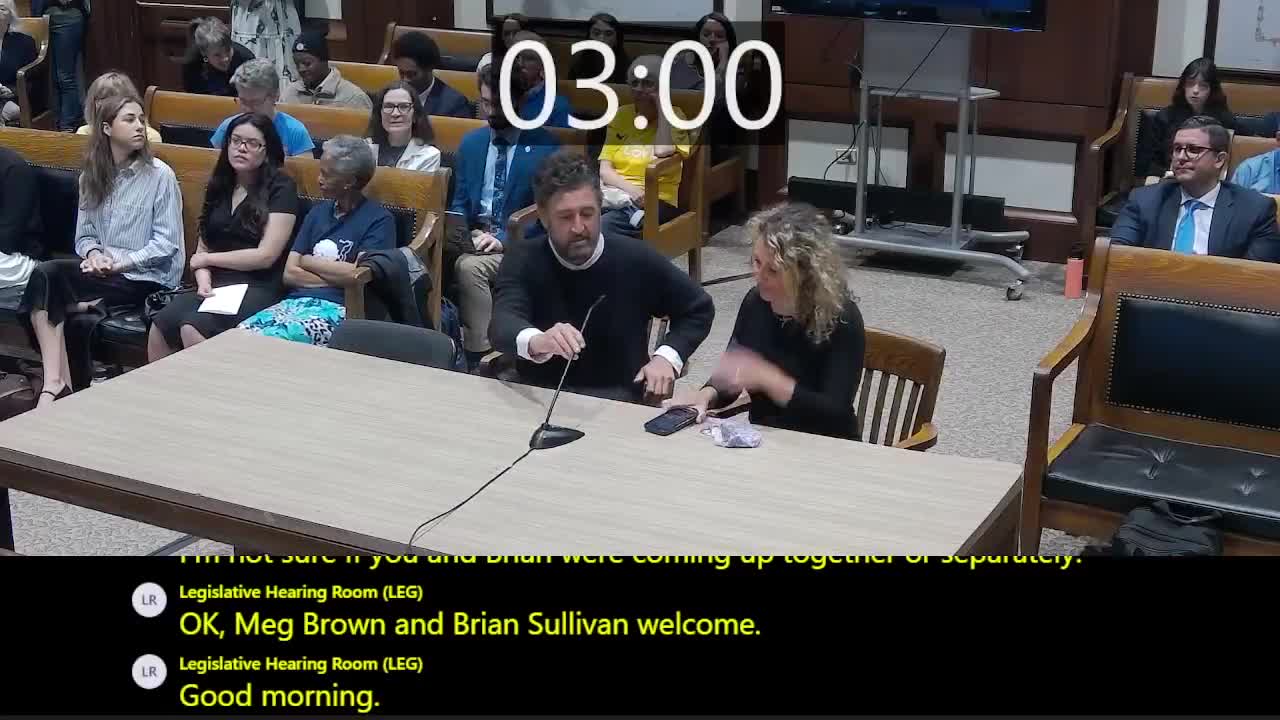
Megan Shy Brown, whose husband died after a wasp sting and anaphylactic reaction, described the incident and urged lawmakers to act: "No one could save him because there was no one who had epinephrine," she testified. Her family asked the committee to approve a bill that would allow public entities to acquire and maintain undesignated stock epinephrine and to train employees to administer it without fear of civil liability.
Advocates, including the Asthma and Allergy Foundation of America (New England chapter), described the clinical urgency and noted statistics showing a significant number of anaphylaxis events occur in people without a prior diagnosis. Jan Hanson of AAFA New England told the committee that epinephrine should be administered within five to 30 minutes of symptom onset for best outcomes and that 25 percent of epinephrine administrations are to people not previously known to have a severe allergy.
Several family members and first‑hand witnesses recounted delays in emergency care and urged prompt legislative action. The committee received the testimony and indicated it would consider stakeholder input and statutory drafting as it evaluates the bill.