Get Full Government Meeting Transcripts, Videos, & Alerts Forever!
Get email alerts on the Carbon Sequestration topic
No spam. Unsubscribe anytime.
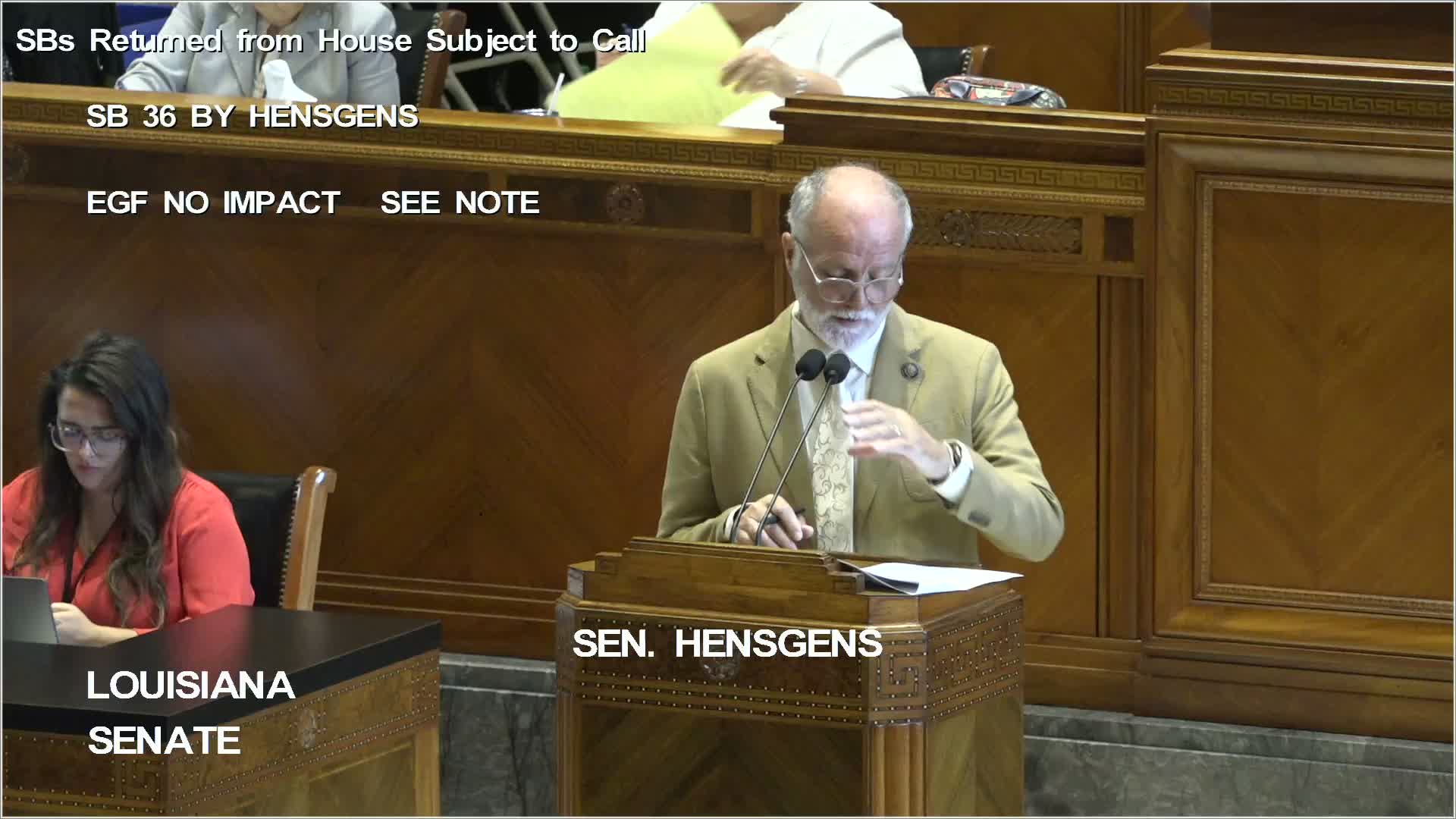
Senator rejects House amendments to carbon sequestration bill, sends measure to conference
Summary
Senate Bill 36, which would amend Title 30 regarding carbon sequestration and the powers of the commissioner of conservation, had House amendments rejected on the Senate floor; sponsor asked to send the measure to conference, citing pending language changes and grandfathering provisions.
Senate Bill 36, an act to amend Title 30 relating to carbon sequestration and the jurisdiction, powers and duties of the commissioner of conservation, had House amendments rejected on the Senate floor and was placed in conference.
Senator Henskins, the bill sponsor, told the chamber he wanted time to review the House changes and asked that the Senate reject the amendments and send the bill to a conference committee. “I wanted to, reject the, amendments and send it to conference,” Henskins said, and noted there was some grandfather language he needed to review.
Action taken: The Senate moved to reject the House amendments; the clerk recorded 35 yeas and 0 nays on the motion to reject the amendments and send the bill to conference. The transcript records no further floor debate or final passage on the measure.
Why it matters: The bill affects statutory authority under Title 30 over carbon sequestration, including the commissioner of conservation’s jurisdiction and powers. Rejecting amendments and sending the measure to conference means senators and House members will negotiate final text before a final vote.
Clarifying details on the record: Sponsor cited “grand father language” (grandfathering) in the House amendments and requested time to review changes. No final text or specific policy changes were read into the record during the excerpt provided.
Next steps: The bill was sent to conference for reconciliation; the transcript does not record when the conference will meet or what specific changes the sponsor will seek.