Get Full Government Meeting Transcripts, Videos, & Alerts Forever!
Get email alerts on the Tobacco Regulation topic
No spam. Unsubscribe anytime.
Southborough Board of Health reappoints tobacco-control manager; board discusses flavored products, nicotine pouches and kratom
Summary
The Board reappointed its tobacco control program manager for FY26 and heard a yearly update about retail inspections, flavored tobacco products, nicotine pouch potency and kratom sales. Staff said the board has authority to decide local restrictions and agreed to an in-person review of product samples before any regulatory change.
Southborough Board of Health reappointed its tobacco control program manager for fiscal year 2026 and heard an update on flavored tobacco products, nicotine pouches and kratom sales in local retailers.
The reappointment took place at the board’s June 11 meeting, where members voted to appoint Pari (tobacco control program manager) to continue inspections and education work under the MetroWest Tobacco Collaborative. The board then received a report from Pari about retail compliance, flavored products and emerging substances in stores.
The appointment matters because the board enforces local tobacco regulations and can hold a public hearing to update those regulations to address products that manufacturers or distributors label as “clear” or “unflavored” but that staff say have detectable flavors, and to consider rules for products not explicitly covered by existing state guidance.
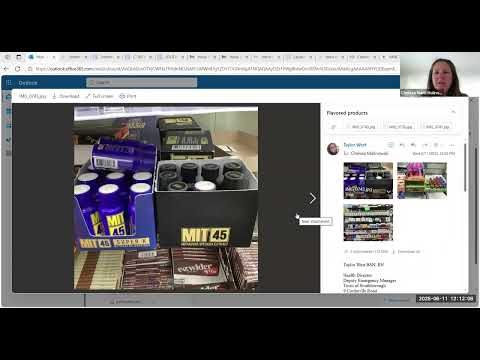
Pari reported that Southborough has nine retail tobacco vendors and that undercover youth compliance checks in fiscal year 2025 found no sales to minors. “For the year, fiscal year, FY '25, we did we don't have a we didn't have any sale for minor in Southborough,” Pari said. Pari said inspections completed roughly 10 days before the meeting turned up flavored products at several retailers, and he shared photographs with the health director.
Pari told the board that the state-level MetroWest Tobacco Collaborative / Department of Public Health guidance indicates flavored tobacco product decisions are left to local boards of health. “The state, MTCP, DPH has mentioned clearly that the flavored tobacco product should be decided by the Board of Health in each communities,” he said. He recommended bringing actual product samples to an in-person meeting so members could inspect and, when appropriate, “sniff test” packs to identify flavors.
Pari described other items found in stores: nicotine pouches with varying milligram levels (he reported seeing pouches from roughly 3 mg to 15 mg in the region), kratom products appearing in more stores, and nitrous-oxide canisters he said are sometimes abused for inhalation. He noted that several communities in the collaborative have taken different approaches: “Concord, Vespero, and Norfolk, they have removed, the flavored vape products and flavored nicotine pouches from the community,” he said, and he said Hopkinton recently limited nicotine pouch sales to adult-only stores (Hopkinton has none). He also told the board that manufacturers and distributors have at times represented products as unflavored even when the product packaging or odor indicates otherwise.
Board members and staff clarified the process: the board already has local tobacco regulations adopted after Massachusetts’ June 2021 action on flavored products, and local rulemaking to add or remove products would be done by regulation after a public hearing, not at town meeting. Chelsea Balinowski (chair) stated the board has authority to hold a public hearing and update the local tobacco regulations and that a change would not require town meeting.
The board did not adopt any bans or changes at the meeting. Instead, members asked Pari to bring physical product samples to an in-person meeting this summer for the board to review and to continue coordinating with the health director on next steps. Pari said he was available for an in-person review and that he would provide the samples if the board wanted to schedule that meeting.
What the board will do next: staff (the director and Pari) will schedule an in-person review of product samples; if the board chooses regulatory action after seeing evidence it can open a public hearing and proceed with a regulatory amendment.
Evidence and public record: Pari provided photos and a verbal compliance summary during the meeting. No rule change was proposed or adopted at this meeting; board members asked staff to return with samples and regulatory language if needed.