
Putnam County legislators debate adding public-comment periods to full meetings before votes
Get AI-powered insights, summaries, and transcripts
Subscribe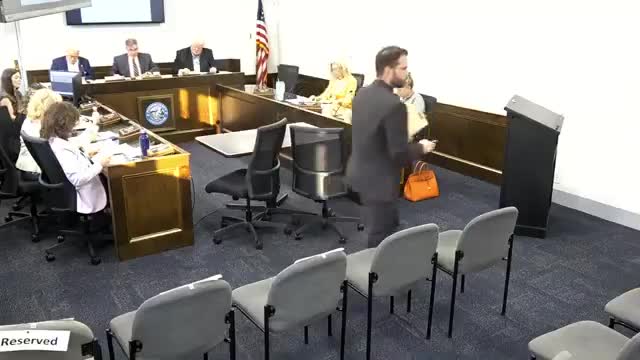
Summary
Legislators discussed a proposed amendment to the legislative manual that would require designated public-comment periods before votes at committee and, in limited cases, at full legislative meetings; no final vote was taken.
The Putnam County Legislature’s rules committee held an extended discussion about a proposed amendment to the legislative manual that would formalize public-comment periods before votes at committee meetings and in certain full legislative sessions.
The chair (identified in the meeting as the committee chair) presented a revised, compromised draft intended to preserve the committee process while guaranteeing public input in two limited situations: (1) during committee meetings prior to any vote on agenda items, and (2) when a pre-filed resolution or “additional business” item reaches the full legislature without prior committee review. The draft also calls for reasonable public notice of agendas and says the public should have a fair opportunity to speak consistent with legislative order.
Committee members debated details that included whether the time allotted to each speaker should be a fixed standard (for example, three minutes) or be set by the meeting chair, how to handle an unusually large number of speakers, and how to provide advance notice of public-comment opportunities. Several legislators said they preferred a predictable, standard time allocation and that adopting the manual later in the year — in February rather than at the January reorganization meeting — could allow the process to include a full committee review before the manual takes effect.
Members also noted competing priorities: committee deliberations are the principal venue for detailed policy review, and moving substantive items directly to the full legislature is appropriate only in limited, time-sensitive situations. The draft limits full-legislature public comment to those time-sensitive items that arrive without committee review and to reorganization appointments that are not typically subjects of public comment.
No formal motion to change the manual was adopted at this meeting; committee members agreed to continue deliberations and to circulate a redline comparing the original February proposal to the chair’s revisions. Several legislators asked that the changes be discussed further in committee, and one proposed schedule change would defer adoption of any new manual language until the February meeting cycle so the existing rules would govern the January reorganization.
The discussion showed broad support for preserving the committee review process while increasing transparency and public access where votes are taken without prior committee consideration.