Get Full Government Meeting Transcripts, Videos, & Alerts Forever!
Get email alerts on the Housing topic
No spam. Unsubscribe anytime.
Worcester housing chief outlines production, trust-fund commitments; commission asks city manager to pursue trustee appointments and a UBI pilot
Summary
Peter Dunn, the city’s chief development officer, told the Human Rights Commission the city has recent housing production gains but faces financing headwinds and described $18.4 million in trust-fund commitments tied to hundreds of affordable units.
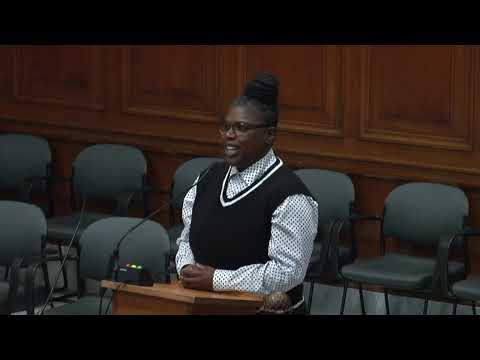
Peter Dunn, the city of Worcester’s chief development officer, told the Human Rights Commission on Monday evening that the city has recent gains in housing production but still faces financing and feasibility headwinds.
Dunn said the city saw more than 900 new units come online in 2024 and that 1,500 units were actively under construction at the time of his presentation. He described three strategic pillars—housing production, preservation and healthy homes—and said the city has used a combination of American Rescue Plan Act (ARPA) funds and other sources to seed an affordable housing trust fund. "Our affordable housing trust fund has committed $18,400,000 to affordable housing projects in the city. It's 552 total units, 497 of which are affordable," Dunn said during the presentation.
Those investments included prioritizing accessible units; he said the trust fund required at least 10% ADA-accessible units in funded projects, producing 72 ADA units so far. Dunn also outlined state and federal funding streams the city uses, including Community Development Block Grant (CDBG) funds, HOME-ARP, Emergency Solutions Grants (ESG), and low-income housing tax credits.
Why it matters: Worcester’s housing strategy ties municipal planning, zoning changes and direct funding to a broader aim of producing, preserving and improving housing stock for low- and moderate-income residents. The commission’s subsequent actions show local civic bodies pushing the administration to fill governance gaps for those funding tools and to explore new anti-poverty approaches.
Key details from the presentation
- Housing totals and affordability: Dunn said 2024 produced 900+ new units, with roughly 23% of units under construction designated as affordable under various programs. He said the city’s subsidized housing inventory stood near 13% of housing stock, above the 10% threshold tracked under Chapter 40B (the state’s subsidized housing inventory benchmark).
- Affordable Housing Trust Fund: Dunn said the fund was capitalized initially with ARPA dollars and interest accrued on those funds; he said the fund has leveraged roughly $360 million in other financing for projects tied to the trust fund’s commitments.
- Permanent supportive housing: Dunn reviewed completed and planned projects that add deeply affordable units with services, and said a previous 2019 study estimated the city needed 106 permanent supportive units; he reported roughly 64 units completed since that study.
- Policy tools: Dunn summarized the city’s inclusionary zoning ordinance (adopted 2023), accessory dwelling unit (ADU) enabling zoning, and the recently completed housing production plan. He also described the state MBTA Communities requirements and an economic feasibility analysis done by CMRPC to review whether inclusionary zoning could unintentionally inhibit production.
Commission actions tied to housing
- Request to fill two trust-fund seats: The commission voted to request the city manager report on plans to fill two vacant seats on the city’s affordable housing trust fund board reserved for residents with lived experience in affordable housing. The motion was made and carried by roll call (Chair Guillermo Creamer Jr. moved; Carrie Witherall seconded); recorded vote: Chair Guillermo Creamer Jr., Aye; Vice Chair Randy Feldman, Aye; Clerk Carrie Witherall, Aye; Bernard Reese, Aye; Anahit Merudian, Aye; Drew Schneeblen, Aye; Jonathan Slivinskas, Aye; Jacqueline Yang, Aye. Outcome: approved.
- Affirmation of inclusionary zoning/CPA funding: The commission voted to affirm support for the city’s inclusionary zoning ordinance and for continued Community Preservation Act (CPA) funding to expand affordable housing. Motion carried by roll call (moved by Chair Guillermo Creamer Jr.; seconded by Jacqueline Yang), unanimous recorded Ayes.
- Universal basic income (UBI) research request: The commission voted to ask the city manager to research and report back on the feasibility of a UBI or direct-cash pilot in Worcester. The motion carried by roll call with one Nay (Vice Chair Randy Feldman); recorded vote: Chair Guillermo Creamer Jr., Aye; Vice Chair Randy Feldman, Nay; Clerk Carrie Witherall, Aye; Bernard Reese, Aye; Anahit Merudian, Aye; Drew Schneeblen, Aye; Jonathan Slivinskas, Aye; Jacqueline Yang, Aye. Outcome: approved.
Other program highlights and caveats
Dunn described limits that affect housing feasibility: rising interest rates, high construction costs, and scarce project-based vouchers for deeply affordable units. He said the city has pursued a mix of policy and funding responses (trust fund, CPA allocations, inclusionary zoning with payment-in-lieu options and an ADU ordinance) while continuing to track development activity.
Dunn said the city had secured a $4.1 million HUD lead-abatement grant for ~165 units, used ARPA to boost down-payment assistance (up to $25,000 per household in an ARPA-funded program administered by Worcester Community Housing Resources), and deployed HOME-ARP funds ($5.9 million awarded to the city) to address homelessness through tenant-based rental assistance and supportive services.
What the commission asked next
Commissioners voted to ask the city manager to report back on filling the two lived-experience trust seats and, separately, to analyze a pilot UBI/direct-cash program. Commissioners also asked administration staff to continue coordination on inclusionary zoning and CPA allocation.
Sources and provenance
- Presentation and remarks by Peter Dunn, chief development officer (meeting transcript). Topic text appears at the start of Dunn’s presentation and throughout the meeting. Evidence excerpts: "Good to be with you all here tonight to share a little bit about what we have going on specifically in housing" (transcript block starting 1436.3201) and "There's a wide range of that, that's hard to, I guess, answer with one solution" (transcript block near 7496.835).