Citizen Portal

VA warns against rapid fee changes as committee considers home-loan measures

3782356 · June 12, 2025

Get AI-powered insights, summaries, and transcripts

Subscribe
AI-Generated Content: All content on this page was generated by AI to highlight key points from the meeting. For complete details and context, we recommend watching the full video. so we can fix them.

Summary

The Subcommittee considered proposals to reduce refinancing fees for VA-backed IRRRL loans and to expand voluntary counseling and accessible-home databases; VA told lawmakers the refinancing-fee change would have system, implementation, and taxpayer implications.

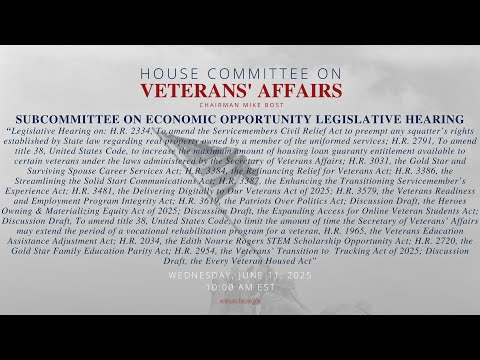
Lawmakers discussed several proposals aimed at improving veterans’ access to homeownership and preventing loan defaults, including a bill to reduce the VA Interest Rate Reduction Refinance Loan (IRRRL) fee, the HOME Act to expand voluntary financial counseling and create a national database of specially adapted homes, and proposals to increase VA home-loan entitlement limits.

Chairman Van Orden described an IRRRL refinancing relief bill that would “reduce the fee for veterans who are using an interest rate reduction loan or IRRRL,” saying it would make refinancing “even less expensive” for veterans and “put money back in veterans’ pockets.” Representative King Hines and others also highlighted complementary proposals to expand counseling and information to help veterans avoid foreclosure.

The Department of Veterans Affairs opposed the IRRRL fee reduction as written. Nick Pamperin testified that “VA does not support HR 33 84, the Refinancing Relief for Veterans Act,” because VA collects loan fees to fund housing loan operations and to reduce taxpayer liabilities, and changes to statutory loan-fee rates would require costly, time-consuming system updates for both lenders and VA. Pamperin said lenders generally require “up to 120 days or more lead time for program changes” and changes to funding-fee rates trigger system and training work.

On the HOME Act, Representative King Hines said the bill would allow VA to partner with veteran-service organizations to offer voluntary financial counseling and create a national database of specially adapted homes for veterans using the Specially Adapted Housing program. Supporters described the proposal as a common-sense measure to reduce the burden on disabled veterans seeking accessible housing.

Committee members asked agencies about implementation risks and timelines. VA’s written testimony and Pamperin’s oral remarks stressed the need to evaluate statutory impacts and system costs before enacting changes that alter fee structures or consolidate eligibility rules. Lawmakers and witnesses urged continued technical work between the committee and VA to identify amendments that preserve program integrity while improving veteran access to counseling and accessible housing listings.