
District recommends Quaver Ed for K–5 health and Edgems for middle‑school algebra after pilot reviews
Get AI-powered insights, summaries, and transcripts
Sign Up Free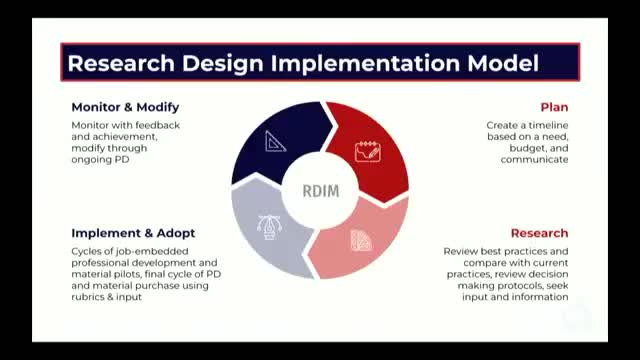
Summary
Teaching-and-learning leaders presented two curriculum recommendations: Quaver Ed for K–5 health, chosen for interactive, bilingual lessons and music/movement elements; and Edgems for middle‑school algebra, chosen for alignment to high‑school algebra scope, parent resources and multi‑level practice. Both recommendations include professional
Palatine CCSD 15 staff recommended two instructional resources for board approval after pilot reviews and committee work: Quaver Ed for K–5 health instruction and Edgems for middle‑school algebra.
Kristen Orlando, assistant director of teaching, learning and assessment, explained the K–5 health review. A pilot group of teachers evaluated resources for age-appropriateness, Spanish-language availability, a balance of inquiry and direct instruction, and student engagement. The review team recommended Quaver Ed’s health curriculum, citing its interactive digital resources, student-facing lessons, embedded music/movement features and Spanish translations. Orlando said the curriculum will be supplemented for required environmental‑health and human‑growth-and‑development units and that a professional‑development rollout, a summer scope‑and‑sequence writing team and classroom monitoring are planned.
Tiffany Costa, a director in teaching, learning and assessment, outlined the middle‑school algebra committee’s recommendation of Edgems (Edgems Math). The committee said Edgems aligns closely with the high‑school algebra scope and offers multiple practice levels (proficient, tiered support and challenge), student consumables with substantial workspace and a family component (home‑connection guidance and videos in English and Spanish). Costa said the annual subscription estimate for the algebra program is approximately $38,000 and that the district will monitor pacing and vertical alignment with the algebra-in-middle-school pathway.
What the board decided: at the meeting the curriculum teams presented their recommendations for trustees’ review. The board did not adopt the resources as a single action at this meeting; staff said professional learning and summer planning will precede classroom implementation.
Why it matters: curriculum adoptions affect core instruction and teacher planning for multiple grades. District leaders said both resources support grade‑level standards, bilingual access and hands‑on practice, and that staff training will emphasize instructional strategies to meet diverse learners’ needs.
What’s next: staff will form summer writing teams to finalize scope and sequence documents, deliver professional development in the fall and monitor classroom implementation during the 2025–26 school year. The board packet includes cost estimates and pilot feedback used by the committees.