
District 15 reports progress on ‘belonging’ priority, wins $1.6 million full-service community schools grant
Get AI-powered insights, summaries, and transcripts
Sign Up Free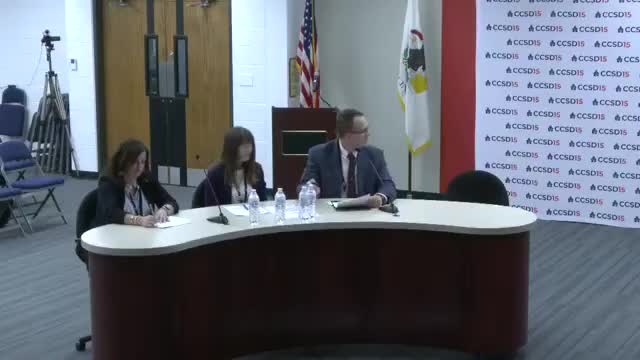
Summary
Leaders in Palatine CCSD 15’s student services detailed work under Strategic Priority 1a—belonging—highlighting declines in suspensions and chronic absenteeism, expansion of restorative practices and new grant funding including a $1.6 million federal full‑service community‑schools award and an ISBE Stronger Connections grant.
Palatine CCSD 15 staff told the board on Wednesday that the district is making measurable progress on the strategic-plan priority they label “belonging,” and described new grant funding and systems changes designed to boost student supports.
Dr. Edgar, who led the presentation, and Dr. Laura Swanland, director of mental‑health and wellness, and Dr. Pam Radford, who oversees intensive behavioral supports, showed the board a scorecard of key performance indicators the district uses to track attendance, office-discipline referrals, suspensions and MTSS implementation. The team said the district is meeting several interim targets and is piloting restorative practices, behavior coaching and expanded community-service partnerships to address student needs.
The district announced it is the subrecipient of a federal full‑service community‑schools grant totaling $1.0 million per year for five years (presented as $1,600,000 in the meeting materials for an initial funding period) and said it also secured an Illinois State Board of Education Stronger Connections grant focused on mental‑health and wellness worth about $667,000 over multiple years. Staff said those funds will expand after‑school programming, partner-delivered mental‑health services, family engagement events and targeted supports at Lincoln and Lake Louise for summer programming.
School-based work this year included expanded attendance messaging (moving from email to text-based notices), an updated tiered attendance‑intervention model embedded in MTSS, new behavior-coaching supports and a redesign of the district’s functional-behavioral-assessment (FBA) and behavior-intervention-procedure process. The leadership team also said it launched restorative-practices cohorts and will expand that work with a national trainer next year.
On outcomes, presenters reported a decrease in chronic absenteeism and a reduction in intense behavioral incidents at scale; they also noted an increase in referrals to targeted interventions that the improved systems are designed to triage and track. The board asked for more detail on year‑over‑year attendance changes and district staff said they will provide additional graphs and Unified Insights dashboard exports to trustees.
What the board decided: the board accepted the update and encouraged continued grant-seeking, partner coordination and rollout of restorative practices; no formal vote was required for the presentation.
Why it matters: the grants and systems changes increase district capacity to deliver mental‑health, youth development and family‑engagement services and may reduce longer‑term pressures on disciplinary removals by investing earlier and more broadly in student supports.
What’s next: the district will scale restorative practices training, expand community-school work with partners such as the Boys & Girls Club and the Bridge, refine the attendance campaign, and report back with the Unified Insights metrics and the additional fall KPIs.