
Palatine District 15 presents FY26 tentative budget showing $7.2 million shortfall, fund balance projected to fall to ~25%
Get AI-powered insights, summaries, and transcripts
Sign Up Free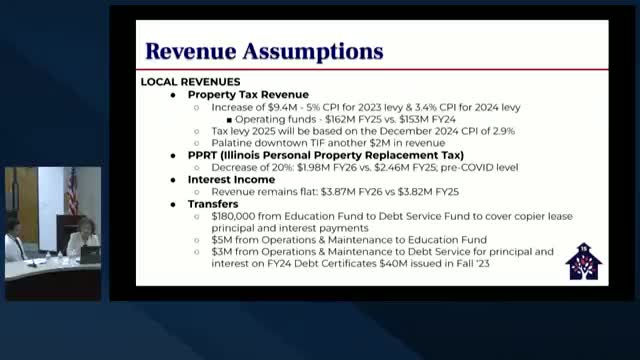
Summary
Palatine CCSD 15 officials on Wednesday presented a tentative FY26 budget that projects operating revenues near $162 million but still anticipates a roughly $7.2 million deficit, with the district’s unrestricted fund balance forecast to fall toward about 25% of expenditures if no further adjustments are made.
Palatine CCSD 15 officials on Wednesday presented a tentative FY26 budget that projects operating revenues near $162 million but still anticipates a roughly $7.2 million deficit, with the district’s unrestricted fund balance forecast to fall toward about 25% of expenditures if no further adjustments are made. Diana McCluskey, the district’s chief school business official, and Anthony Fashoda, director of finance, outlined revenue assumptions, several one-time and ongoing changes, and the accounting transfers the administration proposes ahead of a final budget vote this fall.
McCluskey told the board that local property taxes remain the district’s largest revenue source and that the district expects “about $9.5 million” in additional property tax receipts tied to recent assessment trends and CPI adjustments, and that the downtown TIF will contribute roughly $2.7 million in FY26. She also said state personal property replacement tax (CPPRT) receipts have declined from the levels the district saw in the COVID years and that the district expects CPPRT to fall to about $2 million in FY26.
Fashoda walked trustees through the main expenditure drivers. He said salaries and benefits remain the largest share of the budget and that contractual raises and turnover patterns—especially retirements and the ongoing need for specialized, contract-provided special-education services—are placing upward pressure on costs. He noted an estimated $1 million reduction in Medicare reimbursements and said the rise in contracted related services has been “a roughly $5 million” pressure compared with prior years.
The administration said it has already identified about $6 million in reductions, including department-level savings and other actions that will reduce the projected gap from earlier estimates. The tentative budget includes planned transfers between funds—examples cited were transfers from operations and maintenance to debt service to cover certificate debt—and continues some one-time transfers used in FY25.
McCluskey and Fashoda emphasized the item is tentative; Illinois law and district practice require the board to publish the tentative budget and then adopt a final budget after the school year begins. The administration said final levy and state grant figures that arrive over the summer could materially change the FY26 picture and that trustees will review any recommended changes at the August and September board meetings.
What the board decided Wednesday: trustees did not adopt a final fiscal plan at the meeting. The presentation set the baseline for additional finance-committee work over the summer and a formal adoption of the final budget at the September board meeting, after required public notice and a budget hearing. The district’s finance team recommended continued savings work and said it will return with updated numbers in August and September.
Why it matters: the district’s fund balance provides operating flexibility for the year and cushions against unexpected revenue shortfalls or unplanned costs. The administration told the board the tentative FY26 projections would lower that cushion from recent levels and that the district will continue to pursue cost reductions, program analysis, and community conversations to protect classroom services while restoring structural balance.
What’s next: the administration will finalize levy numbers in late summer, publish the tentative budget for public review as required by state law, hold a budget hearing in August/September, and seek board adoption of a final FY26 budget in September.