Get Full Government Meeting Transcripts, Videos, & Alerts Forever!
Get email alerts on the Water Sewer Rates topic
No spam. Unsubscribe anytime.
Nelson County tables Piney River water and sewer rate changes; asks staff for six-year plan
Summary
After a lengthy presentation and debate, the Board of Supervisors deferred action and asked staff to return with a six-year rate plan (including a 2% annual inflation factor) and to schedule a public hearing before adopting changes to the Piney River Water and Sewer fees.
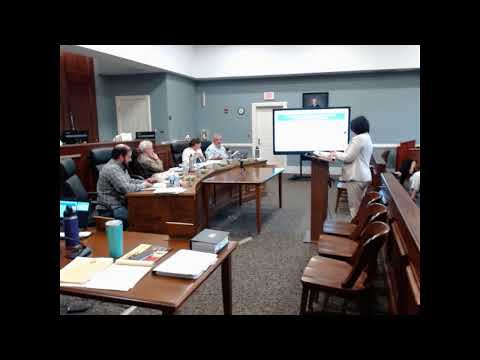
The Nelson County Board of Supervisors on June 10 heard a detailed presentation on the Piney River Water and Sewer System (PRWS) and its rate structure and then tabled a decision until next month, directing staff to return with a six-year proposal that includes a 2% annual inflation factor.
County staff said PRWS was built with federal and state grants and loans — including USDA Rural Development, HUD CDBG, EPA and SERCAP funds — to address failing wells and septic systems in the Piney River community. Staff reported the system had 206 customers as of March 25 (5 water-only, 18 sewer-only, 83 sewer with grinder pump, and 100 customers with water, sewer and grinder pump), that the USDA/RD loan debt was retired in 2019, and that capital and maintenance expenditures have risen since FY2020. Staff said budgeted FY2026 capital, maintenance and equipment expenditures total about $1,500,000.
Staff presented phased rate scenarios (three-, four- and five-year phase-ins) showing how Piney River’s base service and usage fees and connection fees would move toward parity with rates charged by the Nelson County Service Authority (NCSA). Under one 5-year example, the minimum monthly total with a grinder pump would rise from the current $68.50 to $85.54 in year one; staff also noted the last rate adjustment for Piney River was in 2013. Staff summarized affordability thresholds cited by EPA — combined water and wastewater bills that exceed roughly 4.5% of household income can be a high burden — and applied median- and 80%-of-median-income figures for the county and ZIP-code areas to assess impacts.
Board members expressed divergent views. Some members favored a longer phase-in to reduce immediate burden on low- and moderate-income households; one supervisor said many Piney River roads include residents “who are living off of Social Security” and urged the longest feasible phase-in. Other members argued that after 12 years with no increase, a shorter, steeper initial adjustment would be more appropriate and that the board should revisit rates frequently. Several members said the Piney River matter is tied to ongoing discussions with the Nelson County Service Authority about long-term ownership or operational arrangements.
After debate, the board did not adopt rates at the June 10 meeting. Instead it directed staff to return in July with a six-year plan that factors a 2% inflation adjustment annually and to prepare options and a public-hearing schedule; staff was also asked to consider hardship relief pathways, including referral options through the Department of Social Services and the Nelson County Community Foundation. The board’s discussion also noted that state law requires a public hearing and roughly 30 days’ notice before final adoption of rate ordinance changes.
The board indicated it will continue coordination with the Service Authority and consider connection-fee timing and notice periods (board members suggested at least 6 months’ notice for connection-fee changes).