Get Full Government Meeting Transcripts, Videos, & Alerts Forever!
Get email alerts on the Local Option Sales Tax topic
No spam. Unsubscribe anytime.
Knoxville to ask voters to approve half-cent sales tax for neighborhood investments; groceries exempted
Summary
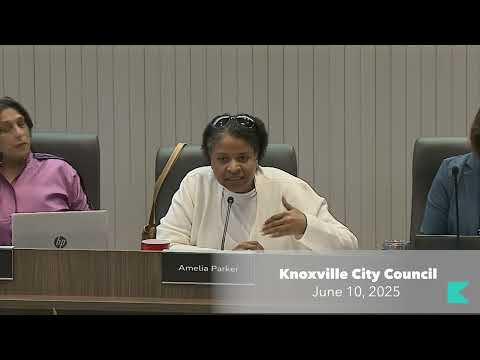
City Council voted to place a half‑cent local option sales tax increase on the November ballot to fund a five‑year neighborhood investment plan that includes sidewalks, greenways, parks and affordable housing; the council also approved a separate ordinance to exempt groceries as defined by state law.
Knoxville City Council voted to ask city voters this fall to approve a half‑cent increase in the local option sales tax to fund a five‑year Neighborhood Investment Plan targeted to sidewalks, greenways, parks, community facilities and affordable housing.
Mayor (name not specified) told the council the proposal is designed to accelerate projects residents have long requested, saying, “the time to repair the roof is when the sun is shining.” The council approved placing the measure on the ballot after several hours of public comment and debate among council members over priorities, equity and process.
The ballot measure would raise roughly $47 million a year for the city if approved, and the council separately adopted an ordinance to exempt the retail sale of food and food ingredients from that increase as allowed by state law. The grocery exemption was presented to reduce the burden on low‑income households; Judith Pilow of CAC testified that even a small monthly increase would strain older adults on fixed incomes.
Supporters who spoke at the council meeting included residents, greenway and walking advocates and business owners. Brandon Bruce, a North Shore resident, said the tax would accelerate infrastructure projects that currently take decades to complete. Hannah Kidderman of Bike Walk Knoxville praised the plan’s emphasis on sidewalks, safe routes to school and greenway connections.
Opponents and critics urged more safeguards to prevent the revenue from fueling displacement or prioritizing tourist amenities. Community organizer Nzinga Amani told the council that the plan’s allocations, as drafted, favored already invested neighborhoods and would “fuel gentrification” unless the city ties spending to equity guarantees. Amani pointed to the five‑year capital plan’s distribution of park and neighborhood funds as evidence and asked for stronger protections for naturally occurring affordable housing and community control over priorities.
Council members debated several procedural and policy issues: whether the five‑year list is fixed or subject to council amendments; how the city will ensure the projects are completed within five years; whether the city has the staff capacity to deliver a heavy construction schedule; and how to protect low‑income households from the regressive nature of sales tax. Vice Mayor Smith and other council members said the list can be refined after voter approval and proposed drafting a resolution to add accountability measures — such as a public tracker and biennial progress reports — before the measure appears on the ballot.
Council members also sought to reassure residents that the increase would be dedicated to locally driven capital projects and not shift existing commitments to the school system; staff explained that the additional half‑cent, if approved only by city voters, would be retained by the city and would not reduce the current countywide allocation to Knox County Schools.
After the public hearing and lengthy council discussion, a motion to place the half‑cent increase on the November ballot and to exempt groceries from that increment passed.
Votes at a glance: the council approved placing the sales tax increase on the ballot and separately adopted the grocery exemption ordinance; the council also accepted a council request to adopt the five‑year Neighborhood Investment Plan as the spending framework to present to voters.
The mayor said staff will return with language, accountability details and a proposed voter information plan to explain how the revenue would be used and monitored if voters approve the measure.
Community members and advocacy groups signaled they will keep pushing for stronger equity protections and for mechanisms that would steer dollars toward permanently affordable housing, not only capital construction projects.