Get Full Government Meeting Transcripts, Videos, & Alerts Forever!
Get email alerts on the Transportation Infrastructure topic
No spam. Unsubscribe anytime.
Green Tree officials, residents press PennDOT for safety, noise and traffic data on I‑376 realignment
Summary
Green Tree Borough officials and residents told PennDOT’s preliminary I‑376 realignment plan would shift traffic into neighborhoods and asked the state agency for more studies and design changes, including a new noise study, before the plan moves forward.
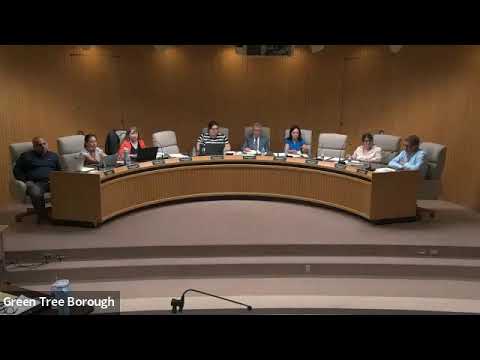
Green Tree Borough officials and residents told PennDOT’s preliminary I‑376 realignment plan would shift traffic into neighborhoods and asked the state agency for more studies and design changes, including a new noise study, before the plan moves forward. At a March public meeting called to gather community feedback on PennDOT’s March 12, 2025 presentation, residents, members of the planning commission and borough council highlighted concerns about a proposed eastbound exit at Poplar Street, pedestrian safety on the Green Tree Road bridge, potential property takings for sound walls and the impacts of removing a westbound entrance ramp.
The meeting’s planning-commission presentation framed three central concerns: the proposed eastbound exit ramp onto Poplar Street could encourage cut‑through traffic into residential streets; the planned pedestrian accommodations on the Green Tree Road bridge need protective barriers in addition to wider sidewalks; and removing the westbound entrance ramp from Rintree Road may cause rerouting and congestion in nearby neighborhoods. “PennDOT is attempting to solve their parkway problem by, substantially increasing traffic on the local roads of Green Tree,” resident Aldo R. Kalani told the meeting.
Why it matters: Council and residents said the changes could increase vehicle volumes on narrow residential streets used by schoolchildren, park visitors and local businesses; raise safety risks at existing four‑way stops and intersections; accelerate wear on borough streets that the borough must maintain; and affect private backyards where sound walls might be placed. Several speakers also said emergency‑response routing could lengthen if on‑ramps are removed.
Most of the night’s public comments focused on Poplar Street. Multiple residents said the Poplar exit would draw drivers off the parkway who would then use Poplar, West Manila and other local streets to reach neighborhood destinations. “It seems that if there’s a way for people to get off of the new ramp, if that is perceived or actual, they’re going to take it,” resident Justin Derco said. Planning commission members and residents suggested options such as limiting movements (for example, left turn only), truck restrictions or signage, but repeatedly asked PennDOT for traffic counts and model outputs that show where projected vehicles would travel beyond the peak‑hour summaries PennDOT presented.
Council members and several speakers also pressed for stronger pedestrian protection on the Green Tree Road bridge. The planning commission recommended adding barricades or fencing in addition to the wider sidewalks PennDOT showed. Jeff Natalya of the planning commission said the commission has “spent a lot of time talking about…sound barriers,” and several residents asked the borough to seek an updated, project‑specific sound study that shows expected decibel reductions, wall height and material and whether a single wall would shift noise to other neighborhoods.
Other community concerns raised in public comment included: the amount and location of any right‑of‑way or eminent‑domain takings to accommodate bridge widening and sound walls; the current condition and expected lifespan of borough bridges that will remain in use during construction; the stated $105,000,000 project cost in PennDOT materials; and the potential for multiple concurrent regional projects to magnify construction impacts.
What the council decided: Borough council members worked through a bullet list compiled by staff and the planning commission and recorded consensus items to include in a letter to PennDOT. The council agreed to ask PennDOT for: (1) reconsideration or study of alternatives to the proposed eastbound Poplar Street exit that could prevent local cut‑through traffic; (2) inclusion of physical pedestrian protections (barricades/fencing) on the Green Tree Road bridge in addition to wider sidewalks; (3) clarification of the effects if the westbound entrance ramp is removed and language that notes the removal “may negatively impact local traffic flow and could lead to increased congestion or detours through nearby neighborhoods;” (4) an updated sound study showing wall height, materials and expected noise reductions and any property impacts; (5) a comprehensive, project‑wide traffic and safety data package (build and no‑build total daily volumes and accident locations/times, not only 15‑minute peak intervals); (6) information on other nearby planned projects and their timelines so the borough can assess combined impacts; and (7) the current condition and anticipated remaining life of borough bridges that will be relied upon during construction. Borough staff said PennDOT had asked for a list of concerns and that a letter to PennDOT would be drafted and circulated for review; PennDOT will present final plans to the public again when they are ready.
What was not decided: The council did not adopt any ordinance, restriction or engineering change itself; it voted (by council consensus) to send the list of concerns and requests to PennDOT and to circulate the draft letter to the planning commission and the borough’s paid engineering consultant before transmittal. No formal mitigation design or funding commitment was made by the borough at the meeting.
The next steps stated at the meeting were that borough staff would draft and circulate the letter (council asked that it be sent no later than mid‑July), share it with the planning commission and the borough’s engineer for technical review, and then transmit the finalized letter to PennDOT. PennDOT will be expected to return with a finalized plan and a second public presentation where residents and the borough may comment again.