Get Full Government Meeting Transcripts, Videos, & Alerts Forever!
Get email alerts on the Tax Policy Irs Efficiency topic
No spam. Unsubscribe anytime.
Lawmaker Questions IRS Official on ‘Pillar 2,’ IT Spending and 2.6% Growth Assumption in Tax Bill
Summary
A U.S. representative who identified himself as representing Ogden, Utah pressed Secretary Besson on the effects of the OECD "pillar 2" global minimum tax, the IRS’s technology spending and the growth assumptions underpinning a House Republican tax bill.
A U.S. representative who identified himself as representing Ogden, Utah pressed Secretary Besson on Wednesday about the potential effects of the OECD’s “pillar 2” rules, the Internal Revenue Service’s technology spending and the economic growth assumptions used to score a recently passed House Republican tax bill.
The exchange centered on whether proposed federal tax and regulatory changes would reverse recent trends in corporate repatriation, how the IRS is using staff knowledge to cut waste, and whether a 2.6% annual GDP growth assumption in the bill’s scoring is realistic. “This is a tough discussion, to be able to push back on what pillar 2 could ultimately do where we are losing so much revenue to foreign countries,” the representative said, adding that the Tax Cuts and Jobs Act had encouraged some companies to bring revenue back to the United States.
The representative also raised concerns about federal waste and urged the agency to use experienced IRS employees to improve operations. “There’s no question that there are billions of dollars worth of waste within the federal government, and I applaud the work that the department is doing to address, in particular, improper payments and improve verification pain before payments go out,” he said. He told the official he represents Ogden, Utah and “the 7,000 IRS employees that work in and call Utah home,” and asked to meet to discuss efficiency at the Ogden facility.
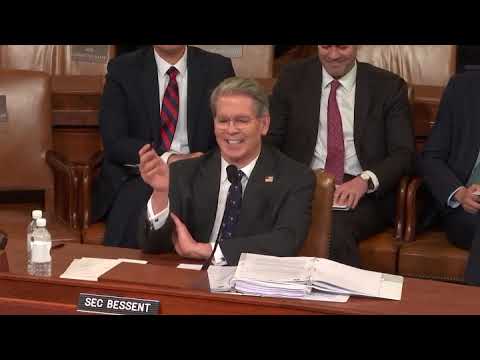
Secretary Besson responded that the agency is pursuing a culture change and empowering staff to propose solutions rather than imposing them from above. “We are aiming for a culture change at the IRS. We have empowered we have we are cutting waste,” Besson said. He also described the agency’s annual technology spending as “3 and a half billion per year, which is 10 times more 10 times more than a private sector bank would spend for the equivalent payments,” and said IRS workers were “feeling empowered” by proposed improvements.
The representative pushed on fiscal projections tied to the House bill, saying the bill “assumes a 2.6% growth rate” over 10 years and arguing that, with spending cuts and offsets, that assumption would be sufficient to offset the bill’s tax changes. He summarized the projected fiscal effect as a reduction in the deficit by “an assumed 1 $184,000,000,000,” and asked whether similar growth rates were achievable. Besson replied that such growth had been achieved previously and that recent technology investments — including large-scale AI spending — could raise productivity and accelerate GDP growth.
The representative also addressed use of nonpartisan scoring. “It is not unfair for my colleagues on the Democrat side to use CBO scoring in any type of criticism,” he said, adding that he believes the Congressional Budget Office “undervalue[s] the potential” in some cases. He concluded by saying the nation has “an opportunity here to create a strong GDP” and yielded back.
The exchange was a mix of policy questions, operational requests and fiscal forecast debate: the representative sought both a meeting about local IRS operations and assurances about national growth assumptions used to justify tax changes. No formal votes or agency commitments with deadlines were made on the record during this segment.