Get Full Government Meeting Transcripts, Videos, & Alerts Forever!
Get email alerts on the Housing Funding Cdbg Home Esg Hopwa topic
No spam. Unsubscribe anytime.
Committee recommends forwarding HUD entitlement program allocations to full council
Summary
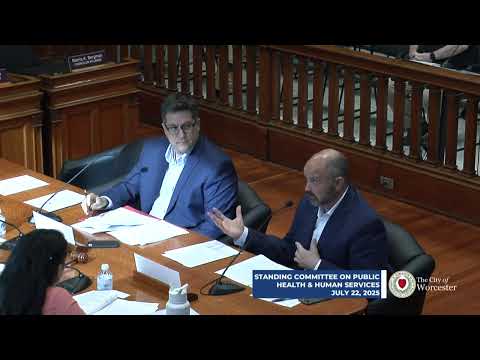
Worcester Public Health and Human Services Committee Chair Councilor Luis Ojeda on Tuesday recommended that the committee forward four resolutions to the full City Council seeking adoption of the city’s fiscal year 2026 HUD entitlement program allocations, including CDBG, HOME, HOPWA and ESG.
Worcester Public Health and Human Services Committee Chair Councilor Luis Ojeda on Tuesday recommended that the committee forward four resolutions to the full City Council seeking adoption of the city’s fiscal year 2026 U.S. Department of Housing and Urban Development (HUD) entitlement program allocations, including Community Development Block Grant (CDBG), HOME, HOPWA and Emergency Solutions Grant (ESG).
The recommendation matters because those federal funds (combined roughly $6 million annually, staff said) support housing, homelessness services, neighborhood infrastructure and nonprofit human services across Worcester; committee members and community advisory committees said the grants are central to local housing stability and youth programs.
Greg Baker of the city’s Economic Development division told the committee the entitlement cluster totals roughly $6 million and noted a small overall decline from the prior year: “We did receive a 4% reduction in CDBG,” he said, and the amount available for CDBG public services was approximately $613,341 this cycle. James Brooks of the Housing Development Division described how the HOME program supports new affordable housing and tenant-based rental assistance, and said HOME funds in Worcester this year are just under $1.6 million.
Baker said the combined HUD cluster funds support a range of city priorities: nonprofit human services (case management, food pantries, youth programming), an annual allocation to the city’s affordable housing division (a little over $500,000), demolition and blight remediation through Inspectional Services, small-business microloans from the economic development arm, targeted neighborhood development in Green Island and a roughly $1 million yearly commitment from the city manager to assist the school district with repairs or additions in low- and moderate-income areas. Brooks said the housing division uses CDBG largely for owner-occupied home rehabilitation and applies a five-year residency restriction to prevent immediate flips; he also described an age-restricted elder program that has become a rapid source of referrals.
Committee members asked technical questions about demolition liens and program mechanics. Brooks said the demolition program coordinates with Inspectional Services and Chapter 139 processes, and that when the city funds demolition it records a no-interest lien on the property that becomes due at transfer: “We do place a lien on the property for whatever the cost of the demolition is. It's a no interest type lien,” he said.
Representatives of the Community Development Advisory Committee and several nonprofit recipients addressed the committee during public comment. Michael Murphy, outgoing chair of the Community Development Advisory Committee, described the scoring and review process used for the year’s applications and called the committee “very active.” Anicia Jimenez of Worcester Common Ground, Tim Garvin of United Way of Central Massachusetts, Leah Bradley of Central Mass Housing Alliance, Jamie Dillon and Debbie Maruca Hoke of Habitat for Humanity also spoke in support of the recommended allocations and emphasized program impacts such as summer youth programming and housing navigation.
Committee staff confirmed there are four resolutions tied to the item and said the department’s recommendation was to bring those resolutions to the full council for adoption. The committee voted to forward the matter to the full council for consideration.
The full council will consider the four resolutions; the committee did not adopt final appropriations at the committee level, but recommended referral to the council for adoption and formal enactment.
Details from staff materials and the Community Development Advisory Committee’s scoring were presented during the meeting; the city will provide the formal resolution language and the staff report to the council when the items are placed on a full-council agenda.