Get Full Government Meeting Transcripts, Videos, & Alerts Forever!
Get email alerts on the Demolition Delay Ordinance Research topic
No spam. Unsubscribe anytime.
Historical Commission asks CMRPC to survey demolition-delay ordinances, considers age-based standard and public outreach
Summary
The Worcester Historical Commission met with Central Massachusetts Regional Planning Commission staff to advise a statewide survey of demolition-delay ordinances and discussed moving from a property list to an age-based system plus outreach options for affected homeowners.
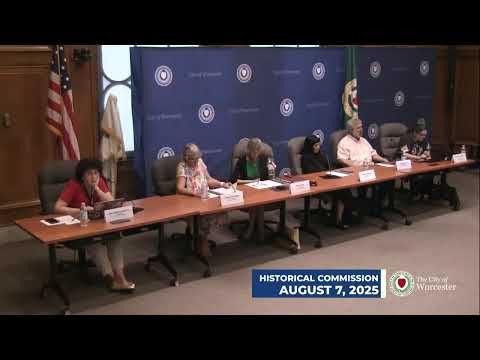
The Worcester Historical Commission on Aug. 7 heard from the Central Massachusetts Regional Planning Commission about a planned survey of municipal demolition-delay ordinances to inform a possible overhaul of Worcester’s own ordinance.
City staff and commissioners told CMRPC they prefer an age-based approach that would capture all properties older than a specified cutoff year rather than the commission’s current property-by-property list. Jane Wyrick, director of land use and zoning at the Central Massachusetts Regional Planning Commission, told the commission, “My name is Jane Wyrick. I am the director of land use and zoning with the Central Massachusetts Regional Planning Commission.” Wyrick said CMRPC will survey Massachusetts communities that use demolition-delay bylaws to identify best practices the commission can consider.
The commission’s interest centers on creating a workable upper limit for what constitutes demolition review when an age-based trigger is used. Commissioners noted that if the cutoff includes many properties — a hypothetical example discussed was a 50- or 75-year threshold — the commission must be practical about what changes it reviews and what it excludes to avoid overwhelming meeting schedules. Staff and commissioners said an age-based rule would remove reliance on an inventory list that can be incomplete or out of date.
Members also asked CMRPC to include questions about public education and outreach in the survey. Commissioners suggested the survey ask how other communities notify newly affected property owners when the ordinance changes, whether communities have used utility or tax bill inserts, and whether they run periodic public workshops or targeted mailings. Richard Hubert, a resident who spoke during public comment, asked for clarification about whether properties not currently on a historic register but older than the chosen cutoff would be included; staff confirmed that an age-based system would encompass such properties.
CMRPC staff said the research is funded through DLTA (District Local Technical Assistance) and that they must complete the project by the end of the 2025 calendar year; they expect to return to the commission in one to two months with survey results. The commission requested CMRPC add questions about outreach methods used by communities that have recently revised their demolition-delay ordinances and about practices for incremental inclusion as successive years of housing age become covered.
Next steps: CMRPC will finalize the survey with the commission’s suggestions and deliver results later this year to inform any proposed amendments to Worcester’s demolition-delay ordinance.