Get Full Government Meeting Transcripts, Videos, & Alerts Forever!
Get email alerts on the Infrastructure Sidewalks topic
No spam. Unsubscribe anytime.
Worcester public-works panel adds dozens of sidewalk, street petitions to DPW list; orders immediate repairs, demands clearer prioritization
Summary
The Public Works Subcommittee moved many resident petitions onto the city's resurfacing lists, issued chairman's orders for near-term hazard repairs, and pressed Department of Public Works (DPW) staff for clearer prioritization after officials warned available funding falls far short of requests.
At a meeting of the Public Works Subcommittee of the Worcester City Council, committee members voted to add dozens of sidewalk and street resurfacing petitions to the Department of Public Works (DPW) list, ordered immediate spot repairs for trip hazards, and pressed department staff for clearer prioritization after residents described damaged sidewalks and failing road surfaces.
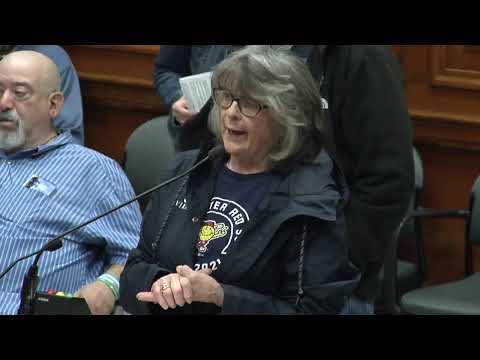
The action followed more than two hours of public testimony from neighborhood residents who described cracked sidewalks, raised water shutoffs and utility lids, and pothole-damaged streets. Committee Chair George Russell said he would issue a chairman's order directing DPW to inspect and address immediate trip hazards at several locations, and the committee approved motions to add the petitions to the formal list that the city uses to evaluate and schedule resurfacing work.
Why this matters: residents and councilors repeatedly told the committee the condition of sidewalks and local streets is a public-safety issue for older residents, schoolchildren and cyclists. DPW staff said the list of proposed sidewalk work presented to the committee totals roughly $1,700,000 and the road resurfacing requests total roughly $6,000,000 — amounts the department said it does not currently have available. Councilors pressed staff for a clearer, district-by-district accounting of streets on the list, which projects are delayed by utility work, and what funds are available for work that can be done sooner.
Most important facts: DPW staff described a two-track response. For immediate hazards — raised water shutoffs, protruding valves and deep potholes — the committee directed DPW to visit sites and, where possible, perform repairs without waiting for full reconstruction cycles. For larger reconstruction and resurfacing requests, the petitions were added to the formal review list; DPW and the Transportation & Mobility Department will evaluate condition scores, project scope and funding. Assistant DPW staff warned the committee that, taken together, resurfacing and sidewalk requests currently on the list exceed available city funding.
Residents and petitioners who spoke at the meeting included Willett, Willard and Haviland Street residents describing decades-long deferred maintenance. Examples cited by petitioners include: raised water-shutoff covers standing several inches above sidewalks on Willett Avenue; sidewalk sections on Haviland Street described as “not ADA compliant” with major lifting and cracking; and Morgan Street residents who said they lack sidewalks entirely and that children must walk at the roadway edge. Multiple residents asked the committee to require earlier, targeted repairs rather than waiting years for full reconstruction.
City staff response and immediate steps: Chair Russell said he would issue chairman's orders directing DPW to visit several locations named at the meeting and to address trip hazards that can be remediated quickly. DPW also clarified its pathway for longer projects: petitions are added to an evaluation list, engineering staff rate condition and need, and district councilors work with DPW to prioritize a smaller set of projects for funding and contracting. DPW staff urged residents to call 311 for targeted short-term repairs (patching, trip-hazard mitigation) while larger projects await prioritization.
Points of contention: councilors and department staff debated how the list of candidate streets should be presented to district councilors. Some councilors said the legislative record — petitions the council has voted to put on the list — must remain visible in full even if a subset is delayed by utility work; DPW staff proposed flagging items that have “utility holds” so district councilors know in advance which streets are likely to be deferred. Councilors pressed DPW to provide a report within 30 days listing streets that have been chosen but not constructed in the last several years and identifying which delays are due to city utility work, private utilities, engineering hold-ups or funding. DPW said it will begin flagging utility holds and work with the council on the format of that report.
Quotes from the meeting: • Chair George Russell: “It's just an honorary nickname, if you will, of the street.” (on honorary street-name placards) • DPW staff: “All the work that's proposed here is about $1,700,000 worth of sidewalk work.” • DPW staff (on streets): “This is about $6,000,000 worth of road work.” • Assistant Commissioner Jason Mello (on utilities): “We can work with the gas company to address that.”
What the committee decided and next steps: the committee voted to add the petitions discussed to DPW’s review list and passed multiple chairman's orders directing DPW to inspect several named locations and to address immediate trip hazards as feasible. Council members requested an updated, district-by-district accounting of petitions, related funding and the cause of any delays, and Chair Russell asked the administration to deliver that list to the council within 30 days. Residents were reminded to use 311 for targeted repairs while longer projects are evaluated.
Background: the petitions reviewed at this meeting covered many neighborhoods and repeated, longstanding complaints about sidewalk and street conditions. Councilors and DPW staff said the city faces competing requests and limited resurfacing funds; council members called for clearer communication so that residents and council offices can see which projects are ready for construction and which are delayed by utility or engineering work.