Get Full Government Meeting Transcripts, Videos, & Alerts Forever!
Get email alerts on the Department Of Education Budget topic
No spam. Unsubscribe anytime.
House subcommittee advances Department of Education budget with staff cuts, boilerplate restrictions and new reporting requirements
Summary
The subcommittee approved the H‑1 substitute for the Department of Education appropriation (HB 45 76 H‑1), which reduces authorization, eliminates certain programs and adds boilerplate restricting use of funds for DEI initiatives and introducing new reporting and personnel policies, fiscal staff said.
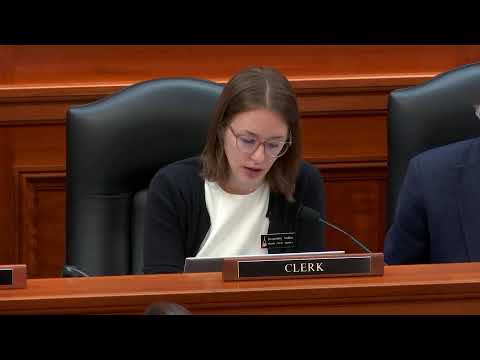
The House Appropriations Subcommittee on School Aid and Department of Education advanced the Department of Education appropriation, H‑1 substitute for HB 45 76, a proposal House fiscal analysts said would reduce overall gross spending and authorization while adding several new boilerplate requirements.
Noel Benson, fiscal analyst with the House Fiscal Agency, told the committee the department proposal reduces the budget from the year-to-date level by about $31.7 million, including roughly $17.3 million in general fund, $8.0 million in restricted funds and $6.3 million in federal funds, and reduces about 118 full-time positions (FTEs) in the department’s authorization.
Major program and boilerplate changes highlighted by fiscal staff - Teacher certification fees: The budget removes $8.0 million in restricted revenue tied to teacher certification fees because HB 41 50 (previously passed by the House) eliminates those fees; fiscal staff said the proposal also removes about 30 FTEs associated with the function. - Vacant FTEs and program eliminations: The proposal removes authorization for 65 currently vacant FTEs (including positions across educator excellence, accountability services, school support and education support operations) and eliminates the library services and technology program (about $5.6 million and 1 FTE) and partnership district support (about $3.6 million and 13 FTEs), fiscal staff said. - Office consolidations and IT reductions: The Office for Strategic Planning and Implementation operations authorization and funding were reduced (including roughly $1.2 million gross and 6 FTEs), and IT was reduced via a 15% across-the-board reduction and additional reductions tied to the certification-fee change. - Boilerplate and compliance requirements: Benson highlighted several new or restored boilerplate sections that would impose operational and reporting requirements on the department, including: - Reauthorization for inter‑transfer of funds within the department by concurrent resolution of the State Administrative Board (section 2.17), and a requirement to publish a quarterly department performance scorecard on the MDE website (section 2.20). - Limits on using appropriated funds for court-approved judgments or settlements in excess of $200,000 (section 2.21). - A requirement for MDE employees to work in person five days per week and to report each morning if they have field work; a policy requirement to ensure employees are working during normal business hours (section 2.26). - Conditions and quarterly reporting on grant awards and a requirement that contractors and subcontractors use the federal E-Verify system for hires during the contract period (sections 2.27–2.28). - Restrictions on using state or federal funds on programs for noncitizens unless the noncitizen is a qualified alien or the funds are used to detain noncitizens in jails/correctional facilities (section 2.29). - Language described (section 2.31) that would restrict MDE from using any funds on diversity, equity and inclusion (DEI) programs. - Educator preparation and training changes: The house proposal would add nonpublic schools as eligible recipients of educator-preparation funds (a 100,000 set-aside was referenced, transcript noted the analyst would confirm the exact amount) and would strike implicit-bias training as an eligible expense for school‑board training (section 6.02), fiscal staff said.
Committee questions Representative Glanville and others questioned a number of the cuts and boilerplate changes; concerns included the timing of the reductions, the impacts of eliminating partnership district supports, and the new restrictions on DEI and on the use of funds for noncitizen services. Benson acknowledged some figures were estimates and offered to provide clarifying follow-ups.
Formal actions The subcommittee adopted the H‑1 substitute for HB 45 76 on a roll call and later reported it to the full Appropriations Committee with the recommendation that it pass. Members recorded both yes and no votes during the reporting roll call; the substitute was reported despite several no votes.
Ending note Fiscal staff asked for questions and offered to provide additional detail or clarifications in follow-up materials.