Get Full Government Meeting Transcripts, Videos, & Alerts Forever!
Get email alerts on the Air Quality Part10 topic
No spam. Unsubscribe anytime.
Michigan agency tells committee Part 10 air testing rules are largely housekeeping updates
Summary
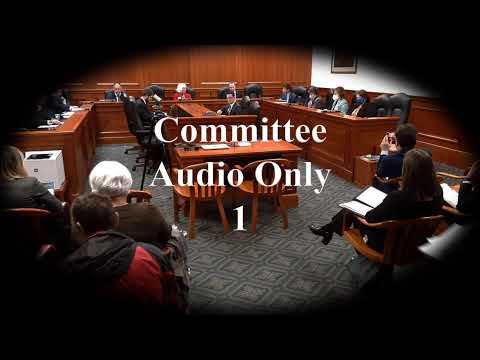
The Michigan Department of Environment, Great Lakes and Energy presented proposed updates to Part 10 of the state's Air Pollution Control Rules to the Joint Committee on Administrative Rules, saying the changes are largely administrative and intended to align state rules with current testing protocols and federal requirements.
The Michigan Department of Environment, Great Lakes and Energy presented proposed updates to Part 10 of the state's Air Pollution Control Rules to the Joint Committee on Administrative Rules, saying the changes are largely administrative and intended to align state rules with current testing protocols and federal requirements.
"I'm Sydney Hart, legislative liaison for the Department of Environment, Great Lakes and Energy," Hart said, introducing the department's overview. Tom Shanley, the department's Air Quality Evaluation Manager, joined Hart and answered technical questions from the committee.
The nut of the presentation: the department said the revisions update references to technical guidelines, consolidate language about the department's authority over performance testing into a single section, specify timing for performance-test notifications, clarify when a stack test begins, and add cross-references intended to remove ambiguity about testing protocols for the automotive sector. Hart said the rulemaking began with stakeholder engagement in late 2019 and included a work group of environmental consultants, industry representatives, academic experts and environmental organizations; a public hearing was held on March 20.
Department officials said the changes are meant to modernize regulatory language and improve consistency rather than to create new regulatory burdens. "The changes before you today are largely administrative and clarifying," Hart told the committee. Shanley added during questioning that the packages are "mostly housekeeping, changes in references, updating to standard style codes and and requirements," and that they are not intended to impose new regulatory requirements on industry.
The department reported receiving one written public comment from Consumers Energy. Officials said that comment prompted specific edits, including removing outdated "permit to operate" terminology, aligning temperature references with U.S. Environmental Protection Agency standards, and updating language about gasket materials and thermometer calibration. The department said it declined some requests because accepted flexibility already exists in the rules or because the requested reference fell outside the scope of this rulemaking.
Committee members asked technical and compliance questions. When asked whether the industry still uses asbestos gaskets for stack testing, Tom Shanley said the industry does not use asbestos gaskets anymore. On wildfire smoke from Canada and ambient air governance, Shanley said that the part 10 provisions govern industrial stack testing and that the agency typically observes about 300 stack tests per year regardless of episodic regional impacts such as wildfire smoke; those episodic events are addressed primarily through public notification and forecasting rather than changing stack-testing expectations.
Hart and Shanley declined to identify changes that would impose new testing obligations, repeatedly describing the revisions as clarification and reference updates. On the Palisades nuclear facility, Shanley said that nuclear power plants generally present a smaller portion of his division's workload from an air perspective and that any incidental permitting needs would be handled by the appropriate division.
The department said the rule language and supporting documents describing stakeholder engagement are in the committee's briefing packet and that staff are available to answer follow-up questions.
Although committee discussion was technical and focused on implementation details, committee members pressed the department on several clarifications, and the department provided specific edits and rationale for the changes it proposed.
If the committee requests additional information, department staff said they will supply the requested supporting documents and technical clarifications to committee members.