Lifetime Citizen Portal Access — AI Briefings, Alerts & Unlimited Follows
House committee hears opposing views on bill to remove insurer notice, set 33% attorney fee
Loading...
Summary
The House of Representatives’ Comisión de Banca, Seguro y Comercio heard testimony June 11 on House Bill 363, which would remove the 60‑day notice to the Commissioner of Insurance before filing certain bad‑faith civil actions (art. 27.164) and fix attorney fees at 33% of recoveries (art. 27.165).
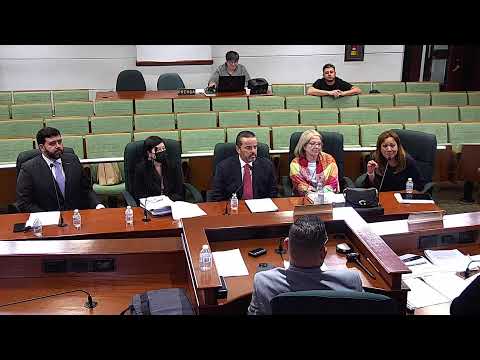
The House of Representatives’ Comisión de Banca, Seguro y Comercio held a public hearing June 11 on House Bill 363, which would amend articles 27.164 and 27.165 of Puerto Rico’s Insurance Code (Law 77 of June 19, 1957, as amended and Law 247 of 2018). The bill would (a) eliminate the current requirement that an insured notify the Office of the Commissioner of Insurance (OCS) and wait 60 days before filing a civil action for certain unfair or bad‑faith insurance practices, and (b) set attorney fees at 33% of the amount recovered and extend fee awards to administrative forums and mediation processes.
Why it matters: Supporters said the current notice-and-wait regime has delayed access to courts, produced essentially no remediation in practice and left many insureds waiting years for payment after major disasters. Opponents warned the changes would encourage speculative litigation, raise insurance costs and threaten insurer solvency and market capacity, particularly for condominium coverage.
Key testimony and positions
- Perla Iris Rivera Guardiola, attorney for the Department of Justice, described the statutory and jurisprudential background and urged technical clarifications to ensure the Commissioner’s role is not unintentionally excluded from enforcement and oversight. Rivera noted the OCS’s existing investigatory and sanctioning authority under the Insurance Code and recommended removing the statutory cross‑reference to mediation in the attorney‑fee provision. (Department of Justice written memorandum and oral presentation.)
- Alexander Adams Vega, Commissioner of Insurance, told the committee that the 60‑day notice process created by Law 247 (2018) has in practice “been a futile exercise” and that the remedy created by that law should operate like other judicial actions rather than as a prerequisite administrative step. He expressed support for treating the action as a normal judicial claim and endorsed allowing concurrent claims under certain models used in states such as Texas. Commissioner Adams also argued for improving speed and investigatory capacity at the OCS so more disputes can be resolved administratively when appropriate.
- Ignacio Veloz, president of the Federación de Condominios y Control de Acceso, urged passage of HB 363 without weakening amendments. He described repeated delays and low settlement offers after hurricanes Irma and María, and told the committee that condo owners would benefit from a cause of action that is “adicional e concurrente” to contractual remedies.
- Iraelia Pernas, executive director of the Association of Insurance Companies (ACODESE), strongly opposed key parts of the proposal. Pernas disputed factual claims in proponents’ materials, cited industry statistics and argued that a mandatory 33% fee and removing the notice requirement would encourage litigation and raise premiums. Pernas told the committee that, citing OCS figures, “se ha resuelto el 99.7 de las reclamaciones presentadas tras el huracán María,” and she warned that copying Florida’s pre‑2019 statutory fee scheme had led to excessive litigation there.
- José Javier Lamas Rivera, representing the Colegio de Abogados y Abogadas de Puerto Rico (delegation of Río Piedras), said the college supports eliminating the 60‑day notice requirement because it often only delays court access and, in practice, adds many months to litigation timelines; but the college opposes removing the prohibition on adjudicating concurrent remedies without protective language to prevent double recovery. The college expressed conditional support for a statutory fee but flagged statutory‑ethics and minor/incapacity limits that must be reconciled with Rule/Statutory fee caps.
- Wilda M. Zurillo Peña, representing MAPFRE Puerto Rico, opposed retroactive effect and the mandatory 33% fee. MAPFRE warned that the bill would retroactively alter settled expectations, could reward plaintiffs who rejected earlier settlement offers, and would raise costs that insurers pass to policyholders. Zurillo Peña asked the Legislature to consider mandatory pre‑suit reconsideration or other measures that preserve opportunities to resolve claims without litigation.
Numbers and procedural details cited in the hearing
- Current statutory timeline and forms: Law 247 (2018) added article 27.164 (cause of action for certain unfair or bad‑faith practices) with an administrative notice form that triggers a 60‑day cure period before certain civil actions may be filed; article 27.165 addresses attorney fees. Present bill would remove the 60‑day/notice prerequisite and clarify concurrency of remedies. - OCS / industry figures cited in testimony: speakers attributed roughly 300,000 claims after Hurricane María; the OCS was cited as reporting 99.7% of claims resolved and about 0.3% remaining in litigation (figure cited by ACODESE). The OCS later reported 356 written notices received under the 60‑day procedure since 2018 and said none had been fully remediated in the cure period (testimony by Commissioner Adams and referenced by other presenters).
Points of contention
- Access versus cost: Proponents argued removal of the notice prerequisite reduces delay and removes a procedural trap that has forced insureds to file prematurely or miss remedies; opponents argued it would increase frivolous suits and litigation costs that drive premiums higher. - Attorney fees and incentives: Proponents said predictable fee awards (or robust fee awards) are needed so under‑resourced insureds can secure counsel and fully vindicate statutory rights; opponents said a fixed 33% statutory fee removes judicial discretion, risks windfalls for plaintiffs’ counsel, and mirrors problems Florida faced before 2019 reform. - Scope and retroactivity: Insurers warned the bill’s language is broad and could apply beyond property claims from Hurricanes Irma and María to other insurance lines and to claims already litigated; several presenters urged careful drafting to limit unintended scope or retroactive effects.
Committee process and next steps
No committee vote was recorded during the hearing. Committee members asked presenters for data and clarifications; the Commissioner agreed to provide insurer‑by‑insurer complaint counts and other statistics on request. Several presenters proposed alternative drafting options, including: (a) deleting the OCS notice as a jurisdictional prerequisite but creating a mandatory, limited pre‑suit reconsideration or expedited administrative referral; (b) preserving judicial discretion on attorney fees rather than a fixed percentage; and (c) clarifying that fee awards are additional to compensation to the insured (not deducted from the insured’s recovery) and specify limits where ethical rules or minor/incapacity law apply.
Ending: The committee recessed at the conclusion of the hearing; members said they would review the written memoranda and the Commissioner’s data before further action.