Get Full Government Meeting Transcripts, Videos, & Alerts Forever!
Get email alerts on the Public Safety Operations topic
No spam. Unsubscribe anytime.
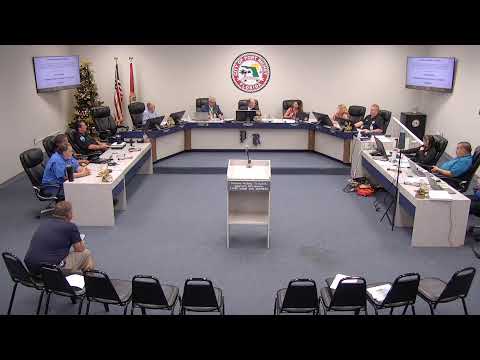
Port Richey council approves auction of impounded vehicles after debate over storage costs and collections
Summary
The City Council approved selling surplus impounded vehicles at auction and directed staff to produce a detailed cost-and-recovery report and explore collection options for unpaid storage and tow fees.
The Port Richey City Council voted to authorize the sale of surplus impounded vehicles at auction after a lengthy discussion about storage costs, tow fees and whether the city should pursue unpaid charges.
City Manager Andrew Butterfield summarized current practice, saying the city stores vehicles on its own impound lot and sends unsold vehicles to auction after a required retention period. He noted the city does not typically forward unpaid storage fees to collection agencies but agreed staff should provide a full accounting. He told council he would bring back a breakdown of out‑of‑pocket costs, auction proceeds and related fees for a recent sample of vehicles.
City Attorney Nancy Meyer explained the legal limits on disposal and retention. “So we keep them for 90 days, but some of them have criminal court cases going, such as an accident with injuries or death, that we've had to keep for 2, 3 years,” Meyer said, describing why some vehicles remain on the lot long past the standard retention period.
Council members pressed staff on whether the city is losing money because towing, transportation and auction fees can exceed the amount recovered for low‑value items such as scooters. Council directed the city manager to return with: a) a line‑item report showing impound, tow, storage and auction proceeds; b) an analysis of how much the city is actually out of pocket; and c) quotes from collection agencies to assess whether outside collection would be cost‑effective.
Formal action: the council moved to sell the listed impounded vehicles at auction; the motion passed (voice vote). Staff will provide the requested financial breakdown and proposals for collection or alternative disposal methods at a future meeting.
Background and next steps: Council members and staff agreed the impound yard provides operational benefits versus third‑party storage, but they want hard numbers to decide whether to pursue judgments or use collection agencies for older receivables. The city attorney reiterated that vehicles tied to active criminal or civil cases must be retained until the legal process is completed.