Get Full Government Meeting Transcripts, Videos, & Alerts Forever!
Get email alerts on the Land Acquisition topic
No spam. Unsubscribe anytime.
Committee backs city acquisition of 801–809 Main St.; adds 6‑month RFQ requirement
Summary
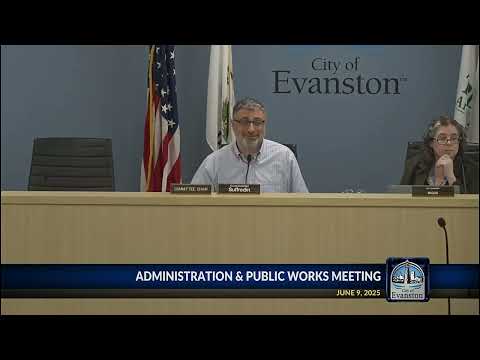
Evanston’s Administration & Public Works Committee voted to report a resolution to the full City Council authorizing the city manager to negotiate purchase of 801–809 Main Street, adding an amendment that no outside consultants be hired and that a request for qualifications (RFQ) be issued within six months.
Evanston’s Administration & Public Works Committee voted to favorably report to the full City Council a resolution authorizing the city manager to negotiate and execute purchase of 801–809 Main Street, with an amendment barring outside consultants and requiring an RFQ be issued within six months.
The amendment, moved by Council Member Davis and adopted after a 3–2 vote on the amendment, requires the city to issue an RFQ within six months; the committee then approved the underlying resolution as amended by a 4–1 vote and sent it to the City Council for final action.
Committee members and staff framed the purchase as a chance to remove a long-vacant, structurally unsafe building from private hands and to combine the parcel with an adjacent city parking lot to create a larger redevelopment site. Council Member Newsom described the request as “a textbook example of the use of TIF funds, to acquire a blighted and troublesome property and turn this into a neighborhood asset.”
Supporters during the public-comment period urged the city to acquire the property for mixed‑income housing. Dreamer Shivanis, associate director of advocacy for Joining Forces for Affordable Housing, told the committee the site is “a rare and important opportunity for the city to proactively invest in a site with significant potential for mixed income housing development.” Residents Robert Keating and Scott Roberts also spoke in favor, saying city ownership could enable affordable units and street‑activating ground-floor retail.
Some residents and council members urged caution. Tina Paden, who said she owns nearby property, objected to using public dollars without broader neighborhood outreach and asserted the purchase price under consideration was $735,000 for a condemned property. Council Member Kelly noted she was not convinced the city had exhausted fines and enforcement options against the owner before pursuing acquisition and described the proposal as “incredibly vague.”
Staff described the financing and next steps. Economic development staff said the city intends to use Tax Increment Financing (TIF) district funds to acquire and, if necessary, demolish the building. Paul (last name in transcript: various spellings), the city’s economic-development staff member who addressed financial modeling, said the property currently generates approximately $30,000 a year in taxes and that the nearby Tapestry Station development could be on the order of a $700,000-per-year increment for the TIF when fully assessed. Staff estimated local demolition would cost roughly $50,000 and said demolishing the structure would reduce liability and make the parcel more marketable to developers.
Community‑planning staff said the city would pursue a public engagement process and then issue an RFQ to identify a developer whose proposal would reflect community preferences. Sarah Flax, community development director, said the standard inclusionary‑housing threshold is 15% of units but that a deeper affordability requirement (30%) can be tied to discounted sale price under accepted practices.
Committee members discussed process questions: corporation counsel Alex Ruggieri clarified that standing committees follow Robert’s Rules rather than City Council rules and staff noted that state or local sale procedures would require an ordinance and public notice if and when council chooses to sell city property. Staff said any sale would come back to council by ordinance (two readings) and that staff is obligated to inform council of any offers.
The committee recorded the following formal actions related to the item: a motion to reconsider a prior vote passed unanimously; an amendment proposed by Council Member Davis prohibiting hiring consultants and requiring an RFQ be released within six months passed on a 3–2 vote (Davis, Kelly and Suffreddin voted aye; Harris and Nussma voted no on the amendment); and the main resolution, as amended, was favorably reported to the full City Council by a vote of 4–1. The committee directed staff to draft a community engagement plan and to return with RFQ documents within the six‑month window stated in the amendment.
What happens next: The item will go to the full City Council for final approval. If the council approves the purchase ordinance, staff said they could either secure the site (fencing) or demolish the building quickly (estimated cost about $50,000) and then proceed with an RFQ and entitlement work before selling or partnering on redevelopment. Staff emphasized that TIF funds are public dollars specifically allocated for redevelopment in the district and that decisions should include community input.
Sources: public comments and committee discussion during the Administration & Public Works Committee meeting.