Get Full Government Meeting Transcripts, Videos, & Alerts Forever!
Get email alerts on the Real Estate Acquisition topic
No spam. Unsubscribe anytime.
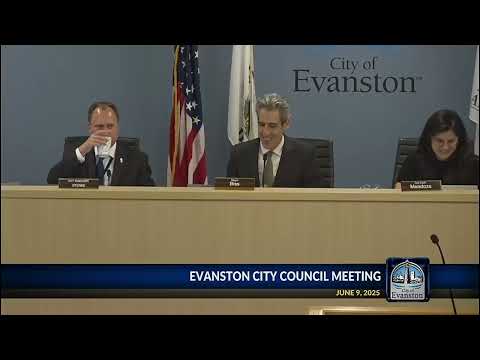
Evanston council approves purchase plan for 801–809 Main Street with seven‑month selection timeline
Summary
The City Council adopted Resolution 54‑R‑25, authorizing steps to acquire 801–809 Main Street and to pursue a developer through an RFQ; the final amendment requires the city to select an RFQ response within seven months or return the matter to council for further consideration.
The Evanston City Council voted to authorize steps toward acquiring 801–809 Main Street and pursuing a developer to create a mixed‑use project that council members said could include affordable housing.
Council member Evan Suffredan moved adoption of “Resolution 54‑R‑25, authorizing the city manager to negotiate and execute the purchase of 801 to 809 Main Street,” noting the committee amendment that “no consultants are to be hired” and that the city would dispose of the property if certain conditions were not met. The motion was seconded and carried after additional amendments to the timeline.
The ordinance was amended twice in council debate. Council member Jonathan Nussma proposed changing a six‑month timeline to 12 months; that amendment failed. Council member Burns then offered an amendment setting a seven‑month deadline tied to selecting a respondent to an RFQ and requiring the item to return to council if an RFQ was not selected; that amendment passed. Economic Development Manager Paul Zalmazak explained the staff schedule, telling council, “I can complete the tasks that gets this RFQ process back to the council by December of 2025” and outlining steps from demolition contracts to an RFQ in September and zoning and sale authorization in 2026.
Supporters at public comment urged the city to buy the property to ensure more affordable housing and to prevent prolonged vacancy. Opponents and several residents asked for clearer public notification and additional use‑policy protections before purchase; speakers requested notices to residents within 500 feet and documentation of prior code enforcement at the site. Council members pressed staff on the timeline and community engagement, and members voiced differing views on automatic resale if the process stalled.
The final roll call showed six votes in favor and three against; council members voting yes included Ailes, Nussbaum, Burns, Rogers, Herradakis and Harris; council members voting no were Suffredan, Davis and Kelly. The resolution as amended was adopted.
What happens next: staff described a process that would include a July–August community engagement period, issuing an RFQ in September, reviewing responses and returning a developer recommendation in November, and seeking authorization to negotiate a sale in December; the final sale and zoning ordinances would follow in 2026 if the process proceeds as described.
Why it matters: Council supporters framed the purchase as a rare opportunity to control development in a transit‑adjacent corridor and advance the city’s housing goals; critics urged clearer acquisition policies and greater transparency about enforcement steps that preceded the proposed purchase.