Get Full Government Meeting Transcripts, Videos, & Alerts Forever!
Get email alerts on the Youth Transit Fares topic
No spam. Unsubscribe anytime.
Metro reports outreach, usage gains for free youth transit; officials urge ORCA card uptake
Summary
Metro presented a May 21 update on the free youth transit program (youth ORCA cards), outreach and classroom education, survey results from six high schools, and early estimates of youth ridership. Staff urged partners to help distribute ORCA cards and noted fare enforcement for adults resumes May 31 with special handling for youth.
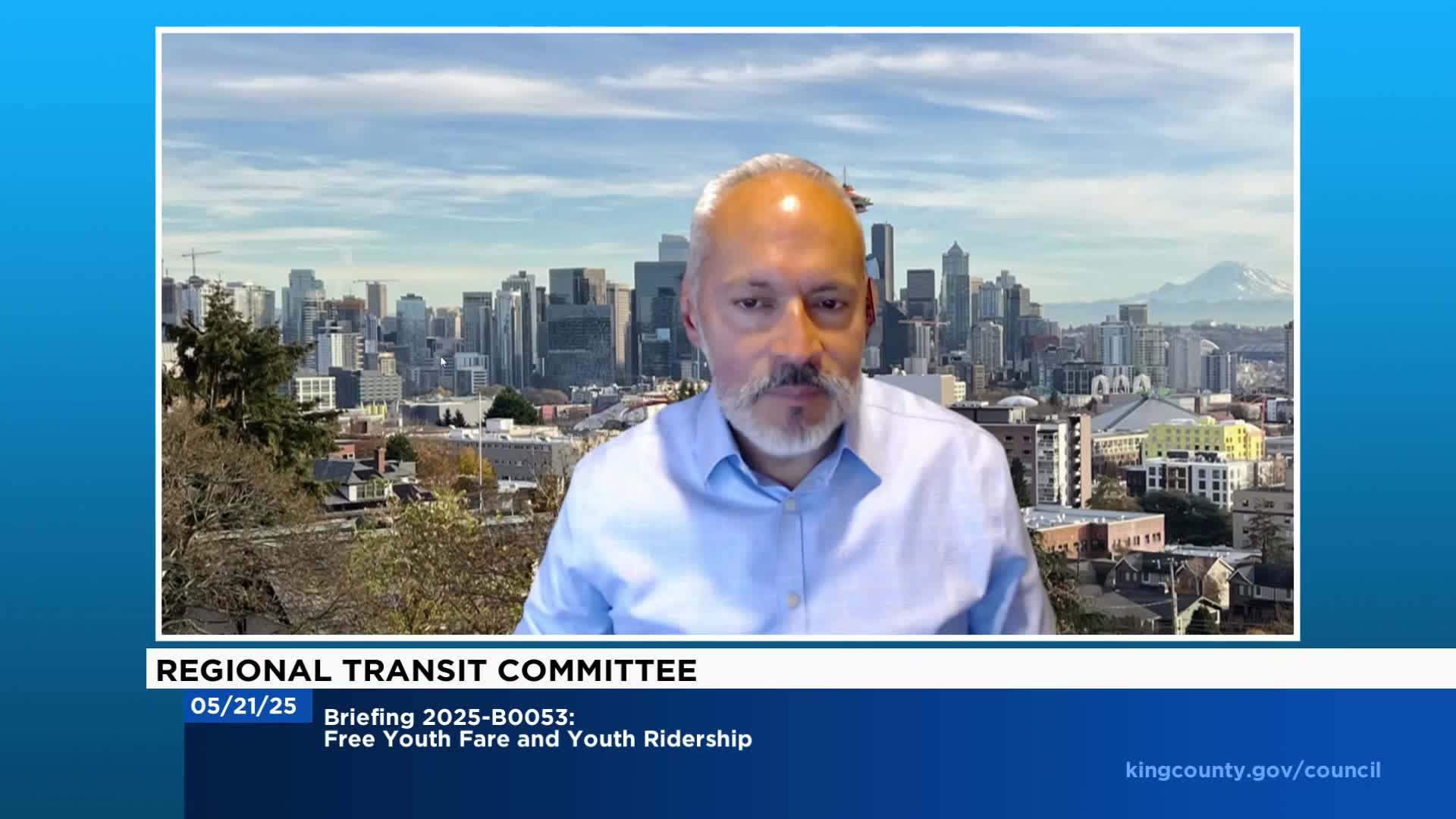
KING COUNTY — King County Metro staff on May 21 updated the Regional Transit Committee on implementation of the statewide free youth transit policy and Metro’s youth mobility efforts to increase young riders’ use of fare media and travel skills.
Metro officials noted the statewide program, enacted in 2022 through the Move Ahead Washington package, allows people 18 and younger to ride transit free across Washington. “Our goal overall is for more young people to have the skills to ride transit confidently,” said Melanie Mayock, Youth Mobility Program Manager at King County Metro.
What Metro reported: staff said a fall 2024 voluntary student survey in six high schools (Auburn, Juanita, Newport, Rainier Beach, Shore Crest and Shorewood) drew more than 1,200 responses: 82% of respondents knew transit was free for youth, and 69% had ridden transit in the past three months. Metro staff estimated youth make up roughly 10% of Metro bus riders — about 800,000 boardings in March 2025 — but said the figure is imprecise because most youth (85–90%) do not tap youth ORCA cards when riding.
Metro described three program pillars — outreach, education and opportunity — including classroom workshops (reaching over 2,000 students this school year), community events (3,000 interactions and 1,500 cards distributed last year), a three-week high-school internship in Renton and targeted marketing efforts. Staff said pilot partnerships with schools and community organizations can increase on-site ORCA card distribution because online ordering can be a barrier.
On enforcement and fare media: Metro staff said fare enforcement will resume May 31. Enforcement officers will not issue citations to youth; instead officers will provide information on how to obtain a youth ORCA card. Metro is updating messaging to encourage ORCA use and exploring future phone-tap fare options with regional partners.
Public comment: an in-person speaker, Alex Zimmerman, said the youth fare “is a good idea” and urged action to expand service for disabled and senior riders; his remarks were recorded during the public-comment period.
Why it matters: Metro staff said increasing youth use of fare media improves data about travel patterns, which helps planners target service and investments. Staff asked committee members and local officials to publicize freeyouthtransitpass.com and local distribution events.
Ending: Metro said its next steps include more school and community partnerships, updated marketing launching May 22, a repeat of student surveys this fall and continued work to make fare media easier for youth to use.