Get Full Government Meeting Transcripts, Videos, & Alerts Forever!
Get email alerts on the Land Use Wbd topic
No spam. Unsubscribe anytime.
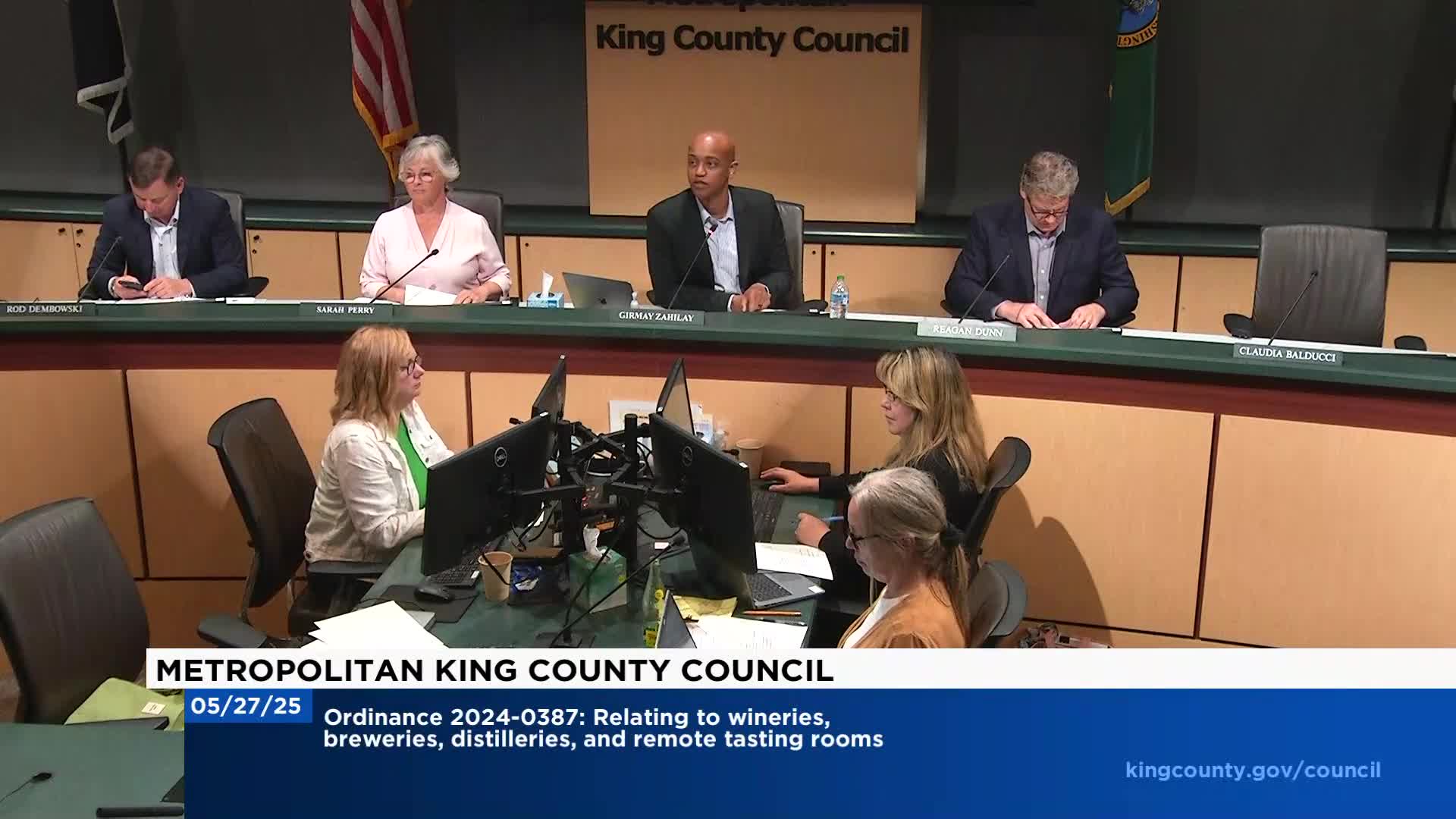
King County adopts ordinance prohibiting wineries, breweries and distilleries in unincorporated rural and agricultural areas
Summary
The council adopted a substitute ordinance that prohibits wineries, breweries, distilleries and remote tasting rooms in unincorporated King County's rural and agricultural zones to comply with a Washington Supreme Court ruling that invalidated an earlier ordinance.
The Metropolitan King County Council on Tuesday adopted a substitute ordinance that amends county rules for wineries, breweries, distilleries (WBDs) and remote tasting rooms, restricting those uses in unincorporated rural and agricultural areas.
Councilmember Kathy (Balducci) (first referenced as Councilmember Balducci in the packet) described the ordinance as the county’s response to the Washington State Supreme Court’s September 2024 decision upholding an earlier Growth Management Hearings Board ruling that invalidated a 2019 ordinance regulating WBDs. “We follow the rule of law in King County, and the state supreme court has said that we must do this,” Balducci said.
Council staffer Erin Ozzens summarized the substantive changes in the substitute ordinance: it repeals a county business-license requirement for WBDs (based on a hearing examiner opinion of preemption), aligns WBD definitions with state law, prohibits WBDs in agricultural and rural-area zones, repeals the remote tasting room demonstration project in the Sammamish Valley, disallows WBDs and remote tasting rooms as home occupations and home industries, modifies temporary-use-permit triggers and removes certain exemptions that had allowed some properties in rural areas to hold events without permits.
The ordinance also restores prior duration, frequency and attendee limits that applied to wineries and sets an effective date of 61 days after notice of adoption or 31 days after a final decision if an appeal is filed. The council adopted the substitute ordinance by roll-call vote, 9–0.
Why it matters: The ordinance affects existing small businesses, tasting-room operators and property owners across unincorporated King County by restricting where and how WBD-related activities can occur. Council members said the rule change attempts to balance environmental protection, farmland preservation and rural character following extended stakeholder engagement and litigation.
Next steps: The ordinance’s effective date depends on post-adoption notice and possible appeals; county permitting staff will implement the revised regulations once the ordinance takes effect.