Get Full Government Meeting Transcripts, Videos, & Alerts Forever!
Get email alerts on the Audit And Finance topic
No spam. Unsubscribe anytime.
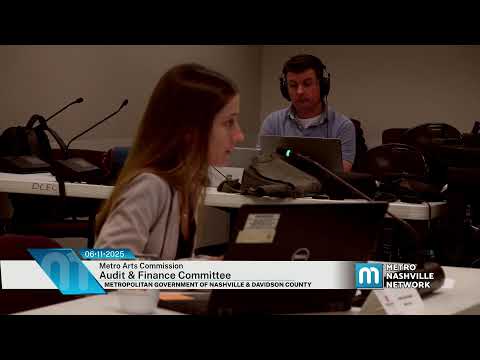
Metro Arts Commission audit plan, new finance administrator and budget changes highlighted
Summary
The Arts Commission— staff outlined an audit implementation plan, introduced new finance administrator Capri Harston and reviewed budget items including a one-time $215,000 disparity-study allocation that was not spent and will return to the general fund.
The Metro Nashville Arts Commission's audit and finance committee discussed an updated audit implementation plan, introduced a newly hired finance and operations administrator and reviewed changes to the commission's budget, including a one-time $215,000 allocation for a disparity study that was not used and will return to the general fund.
The audit and finance review matters matter to arts grantees and commission oversight because staff said the work will tighten internal controls for grants, invoicing and contracting and is intended to reduce the risk of payments going out without executed contracts.
Capri Harston, the commission's finance and operations administrator and HR liaison, told the committee she started April 30 and has met with Metro Finance, Human Resources, Legal, Budget and Procurement as part of her onboarding and response to audit recommendations. "I have met with Metro Finance, Human Resources, I've met with legal, budget, procurement," Harston said, describing work to complete required trainings and establish relationships that will support stronger internal controls.
Interim Executive Director Ashley Bachelder presented a detailed implementation document submitted to Metro's auditors that maps audit recommendations to standard operating procedures for grant administration, technical review, panelist procedures, award notifications, contracting, invoicing and closeout. Bachelder said the audit follow-up will reissue the audit report with this updated attachment and that several grant-related recommendations (identified in the draft as G, H and I) have proposed completion dates as early as Aug. 1.
"We will make sure that there is no payments sent out without a duly executed grant contract," Bachelder said, summarizing the contracting and invoicing SOP under development and the team's work with Metro Legal to standardize document labeling, storage and invoice checks.
Commissioners asked for recurring, easy-to-read budget reports. Commissioner Timothy Jester requested a current line-item budget showing the annual allocation and year-to-date spending so the commission can spot potential overruns early. "Just the annual budget along with where we are at any given point when we have these meetings," Jester said.
Staff reviewed the budget book pages showing fiscal-year differences: the commission reported being under budget year to date, principally because of staffing vacancies and an unused, designated one-time allocation of $215,000 for a disparity study. Bachelder said the unused disparity-study funds are not retained by the commission and will be returned to the Metro general fund for reallocation by the mayor and Metro Council. She also noted a request in the mayor's proposed budget for an approximately $35,000 discretionary fund and a $75,000 line for potential relocation rent.
On grants, Bachelder described a set of SOPs planned for Submittable (the application platform), technical review, panel review, award notifications, contracting and closeout. She said the SOPs will be living documents that require annual updates to reflect grant criteria and dates. Staff also said training will follow to ensure consistent practice and that written procedures help maintain continuity if staff turnover occurs.
Committee members emphasized that the committee's role is oversight of progress rather than approval of internal operating policies. Bachelder explicitly advised the committee that she did not intend to bring staff SOPs to the commission for a formal vote because they are operational matters; the committee— as an oversight body — would monitor progress against the auditors' timeline.
The meeting also included routine items: the committee voted to approve minutes for the April 15, 2025 meeting by voice and later moved to adjourn. Staff said Metro is closing out the fiscal year and that the commission will continue to work with Metro departments to finalize budgets and complete audit-related tasks.
Looking ahead, staff listed near-term deliverables tied to the audit response (draft SOPs, training and internal control checks) and signaled that some grant-administration recommendations are targeted for completion on Aug. 1; the commission will review progress at future meetings.