Get Full Government Meeting Transcripts, Videos, & Alerts Forever!
Get email alerts on the Municipal Budget topic
No spam. Unsubscribe anytime.
Public services budget pared for FY26; officials flag limited flexibility for FY27
Summary
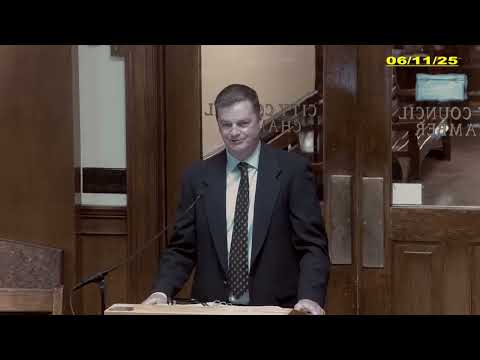
Commissioner Mike Collins, commissioner of public services, told the Committee on Finance and Property the department’s FY26 proposal reorganizes work into new administrative and maintenance divisions but does not add net funding, leaving far less midyear budget flexibility if further cuts arrive in FY27.
Commissioner Mike Collins, commissioner of public services, told the Committee on Finance and Property the department’s FY26 proposal refines budget structure and shuffles existing funding to create clearer administrative and maintenance divisions but does not add net new money.
“Last year we created an administrative division and moved some positions around…we continue with that theme by the creation of a standalone maintenance division,” Collins said, noting the changes are intended to make maintenance spending “a little bit more transparent.”
The discussion grew into a broader accounting of the department’s role as the municipal “safety valve” for the city budget. Finance Director (or budget lead) Mr. Ailes and budget analyst Mr. Perry said the FY26 municipal budget is tighter than prior years and leaves less underspent capacity to reallocate midyear. “It’s kind of this ebb and flow…there is less of that flexibility and safety valve to the point that we’ll be monitoring budgetary activity more regularly,” Ailes said. Perry added: “It’s a tighter budget on the municipal side.”
Councilors pressed Collins on how further cuts would affect services. Collins said many operating and capital line items were already squeezed — paving, electricity, materials and training have been cut or moved — and that another hypothetical cut of $500,000 would be “extremely painful.” He said staff losses would be a last resort: “The last resort would be to lose talent…That would be the absolute last resort.”
On staffing and in‑house trades, Collins highlighted one recent success: a security position that the department added to do specialized work internally. He told the committee the city saved “hundreds of thousands of dollars in outside labor” and completed projects — including replacing school phone systems and leading the combined dispatch transition — without disrupting operations. Collins also said recruiting for an in‑house HVAC/trades position has been difficult but improving: “We’ve actually got a number of interviews scheduled…The marketplace appears to be turning a little bit since January.”
Members also focused on the capital outlay line in highway and maintenance. What had been a $350,000 capital outlay budget was cut to $150,000 in the proposal. Collins said the reduced amount was intended as a contingency tied to the McPherson capital project and could be reallocated midyear if the contingency is not needed. Ailes described the choice as an ARPA-related timing strategy: because some McPherson contingency funds could not be obligated under federal ARPA timing rules, staff reprogrammed other ARPA‑eligible work and placed a $150,000 general fund contingency in the DPS capital outlay line so the city could both meet the ARPA obligation deadline and retain a funding source for the McPherson contingency.
Councilor Sweeney and others questioned whether that contingency would be more transparent if held in free cash or a clearly labeled reserve. Ailes replied the decision was partly operational: the contingency housed in the DPS budget allows quicker reallocation in response to change orders without the delay of a public hearing. Perry cautioned that free cash levels have declined (he cited prior certification numbers) and urged prudence in drawing down reserves for capital needs.
Discussion points vs. decisions
Discussion only: the committee discussed the staffing shortfalls the department faces, recruiting challenges for HVAC/trades, and the implications of a lean FY26 for FY27.
Direction/assignment: staff said they will monitor budget activity more frequently through the year and, if the McPherson contingency is unspent, reallocate it to capital needs in DPS.
Formal action: none recorded in the transcript on these topics.
Ending
Collins and finance staff said they will return to the council during the fiscal year with updates as hires and project contingencies are resolved. Several councilors warned the department’s slimmed margins leave less room for an adverse winter or other unexpected spending.