Get Full Government Meeting Transcripts, Videos, & Alerts Forever!
Get email alerts on the Agritourism Code Amendment topic
No spam. Unsubscribe anytime.
Santaquin planning commission tables agritourism code amendment after questions on size, signage and hospitality
Summary
The Planning Commission held a public hearing on a proposed agritourism code amendment that would allow conditional agritourism uses across many zones, then voted unanimously to table the draft for further edits and outreach after members raised questions about signage, unit counts, livestock rules and other conditions.
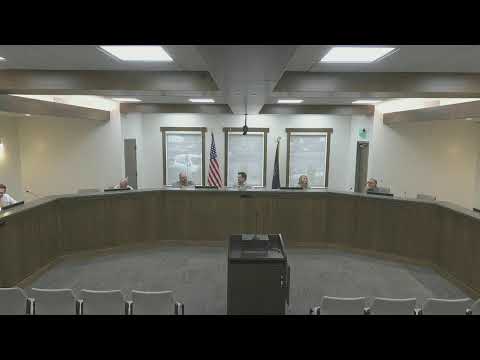
The Santaquin City Planning Commission held a public hearing Tuesday on a draft ordinance to expand agritourism as a conditional use across most zoning districts, then unanimously voted to table the item for additional edits and outreach.
City staff presented the draft as an update to definitions first added last year allowing agritourism as a temporary use and proposed moving toward a more permanent, conditional framework. Jason Bond, community development staff, read the draft definition into the record: agritourism is “the practice of touring agricultural areas to view and participate in agricultural related activities for recreational, entertainment, or educational purposes.” Bond said the proposal would add agriculture and agritourism entries to the land-use table and make agritourism a conditional use in most zones.
Commissioners discussed multiple technical and policy questions during a lengthly review. Key elements in the draft that prompted debate included a 5-acre minimum farm size for agritourism operations, a proposed cap of eight temporary hospitality rooms or units (draft language mirrored existing bed-and-breakfast limits), a 16-square-foot signage limit in residential settings, and flexible parking standards that would allow gravel instead of paved parking in some cases. Bond told commissioners the temporary-hospitality language had been modeled on the city’s bed-and-breakfast conditional-use rules.
Commissioner Romero raised the question of whether 8 rooms should scale with acreage (“Is that per 5 acres or only?”). Commissioners suggested an approach that would allow “8 rooms or units per 5 acres” with a maximum cap, and several members recommended removing two draft conditions that mirrored bed-and-breakfast rules (one limiting unrelated adult occupants in a guest room, another restricting meal service to family-style). Bond and commissioners agreed some conditions could be struck or revised.
Commissioner Wood pressed staff on outreach to growers; Bond said the idea had originated with orchard owners and that staff had met with Dustin Rowley and others but would continue to solicit input and circulate a revised draft. Commissioners also asked about livestock: one commissioner noted that agriculture in some residential zones is already listed as a use but said animal restrictions in R8/R10 zones still apply and should be called out in the draft.
After discussion, Commissioner Nixon moved to table the proposal for further revision and engagement; Commissioner Romero seconded the motion. The motion to table carried unanimously (Commissioners Waite, Hoffman, Wood, Nixon and Romero voting yes). Bond told commissioners he would incorporate suggested edits, consider scalable language for units, and share the revised draft with growers including Dustin and Jace Rowley before the next meeting.
The commission did not adopt any ordinance language at the meeting; the item will return after staff revisions and additional stakeholder outreach.