Get Full Government Meeting Transcripts, Videos, & Alerts Forever!
Get email alerts on the Courts Mandate topic
No spam. Unsubscribe anytime.
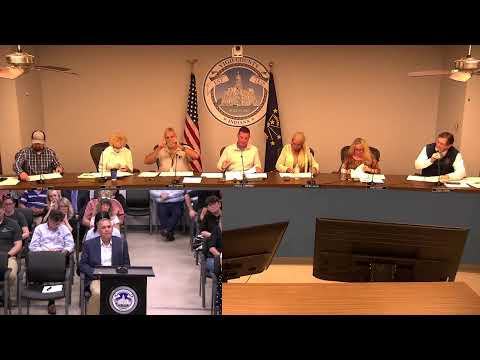
Vigo County council approves settlement with courts over mandate order; votes on several appropriations follow after heated debate
Summary
After extensive debate, the Vigo County Council approved a settlement and related appropriations to resolve a judicial mandate proceeding. The settlement, mediated with a former Indiana Supreme Court justice present as mediator, reshapes how court employee compensation will be funded and prompted sharp objections from several council members.
The Vigo County Council voted to approve a settlement and multiple appropriations that resolve a mandate proceeding brought by the local judiciary, after extended debate over legal strategy, fairness and county fiscal consequences.
Council roll call on the motion to approve the amended salary ordinance related to the judicial mandate recorded the following: Randy Gentry—No; Nancy Alsop—Aye; Brenda Wilson—Aye; Steve Ellis—Abstain; Vicky Wager—Aye; Brad Anderson—Aye; David Thompson—Aye. The motion passed with five ayes, one no and one abstention.
County counsel Michael Wright, who said he was directly involved in negotiating the agreement, told the council the settlement restructures how judicial employee compensation is managed. He said the agreement "takes the decision related to how to compensate employees that you don't have any role in hiring, firing, or overseeing, and places that with the officials who do have that responsibility," explaining the settlement assigns compensation responsibility to judicial supervisors and places limits and review mechanisms on unilateral salary decisions.
Opponents argued the county had not pursued outside review and that settling early exposed taxpayers to large, permanent costs. One council member described the process as an improper use of litigation leverage and urged taking the matter to the Indiana Supreme Court rather than settling. Supporters said prolonged litigation would drive legal costs higher and that the settlement provides finality and safeguards for future budgeting.
The council also approved a series of appropriations and related salary ordinances to fund the settlement amounts and to create a new magistrate position. Several of those votes split the council similarly to the primary settlement vote; subsequent motions to fund the specific appropriations were recorded with the same pattern of votes (five ayes, one no, one abstention) for the mandate appropriations. Separate votes to establish and fund the new magistrate court and related staffing ultimately passed unanimously in later roll calls (7‑0).
Judge Charles Johnson, who spoke for the judiciary, urged approval and defended court staff work. "Our staff does everything to run these courts," Johnson said, urging the council to approve the settlement so courts could function with required staffing and the new magistrate could be implemented.
The meeting record shows the council used a mediator during negotiations; the transcript names Stephen David, a former Indiana Supreme Court justice, as the mediator. Several council members and the county attorney described the negotiations as lengthy and noted that outside counsel hired by the judiciary accelerated legal fees.
What happens next: The settlement and the appropriations bind county budgeting for the affected court staff; the new magistrate court will be funded as approved and the courts will allocate settlement funds according to agreed distributions. Council members who opposed the settlement said they may pursue further oversight and called for more transparency about future mandate risks.
The council’s votes on the settlement and several appropriations were final at the meeting. The settlement documents and appropriation breakdowns are public record and, per council comments, available on request.