Dereva Energy says Hoosier Jack solar project cleared interconnection study; construction targeted for late 2025
Loading...
Summary
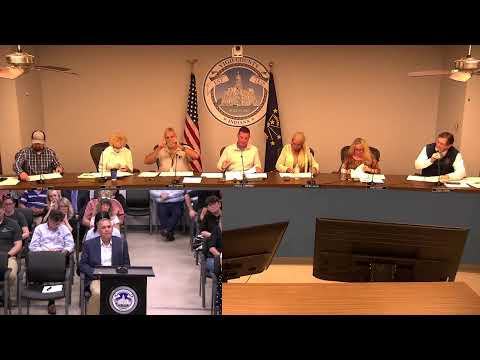
Dereva Energy representatives told the Vigo County Council that the Hoosier Jack Solar Project has advanced through a long interconnection process and could begin construction late this year.
Dereva Energy representatives told the Vigo County Council that the Hoosier Jack Solar Project has advanced through a long interconnection process and could begin construction late this year.
"We actually just signed our GIA last week," Amber Kim, development manager with Dereva Energy, said during the council meeting. She described the interconnection queue managed by the Midcontinent Independent System Operator (MISO) as the main cause of multi‑year delays.
The update put the project’s scale and timeline in context. Dereva said Hoosier Jack is a 175‑megawatt solar project—“about the equivalent of powering 35,000 homes,” Kim said—located on roughly 900 acres that straddle Vigo and Sullivan counties near Farmersburg. The company said the site is a decommissioned coal mine and therefore a brownfield reuse. It will connect to a Duke Energy Indiana transmission line.
Why it matters: Dereva told the council the project represents a major private investment and local tax revenue over time. The company estimated total investment at about $250 million, with roughly $140 million in infrastructure in Vigo County and about $6 million in property tax revenue over a roughly 35‑year project life; the presenters said those figures are estimates.
Council members asked how the county would collect revenue and whether the project would create net new tax dollars. "Property taxes," Kim said when asked how the revenue would be collected. Nathan Hagerman, counsel for Dereva, clarified that the project has a partial tax abatement. "Just a 7 year abatement. And even in those 7 years, it's not a 100% tax abatement," Hagerman said, adding that the site currently is undeveloped and converting it to productive use will generate new property tax payments.
Dereva also reviewed other preconstruction work. Kim said the firm has been conducting environmental and cultural studies, placing equipment orders that have long lead times and advancing design. The company said it expects to start construction late this year into mid‑2026 and to bring the project online by the end of 2027, barring additional delays.
On employment, company representatives estimated up to 200 construction jobs during the build and a small number of full‑time operations/maintenance positions afterward, and said they would attempt to hire locally for maintenance roles.
The presenters invited the council and community to advise on local engagement. "...we'd love to hear your thoughts," Kim said, asking for ideas about schools and organizations the company could work with during construction and operations.
No formal county action was taken at the meeting on the project; the presentation was an informational update.