Get Full Government Meeting Transcripts, Videos, & Alerts Forever!
Get email alerts on the Kindergarten Registration topic
No spam. Unsubscribe anytime.
Medford subcommittee outlines earlier, targeted outreach to boost kindergarten sign-ups
Summary
District staff told the Family and Community Engagement Subcommittee on June 11 that kindergarten outreach now begins in November, uses city census data and community liaisons, and has doubled early enrollment at one school; members discussed one‑page road maps, welcome packets and earlier data-sharing from preschools.
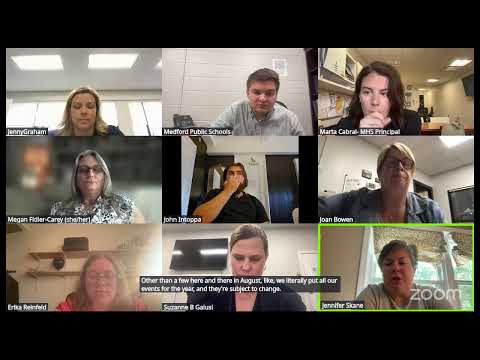
Medford Public Schools staff told the Family and Community Engagement Subcommittee on Wednesday that the district moved up its kindergarten registration timeline this year and is using targeted outreach — including census pulls and partnerships with city liaisons — to get families to enroll earlier.
District staff said the registration timeline now begins in November, with outreach to City Hall in December to request census contact data for children born in the eligible 12‑month window. Megan Fidlakari said district staff partnered with the Medford Department of Public Health, connectors and liaisons to push registration messages, including lawn signs and multilingual outreach, and that change helped some families sign up earlier than in prior years.
Committee member Erica Reinfeld framed the meeting’s charge at the start: "this is a meeting about not the content of what we say, but what the processes are or what what communications go out," emphasizing that the subcommittee should focus on how and when families receive information rather than the curricular details in those messages.
Why it matters: staff reported tangible shifts in timing and distribution of registrations that affect school planning. Central office staff said earlier and more even distribution of registrations across schools helps with class assignments and reduces last‑minute scrambling.
Key details presented by staff included: - Timeline and outreach: staff said the district begins building a prospective kindergarten contact list in November and reaches out to City Hall for census data in December to find children who are age‑eligible. - Partnerships: staff credited the Medford Department of Public Health connectors and liaisons, lawn signs and improved web language for earlier responses from families who historically registered late. - Enrollment changes: staff said Missatuck School’s early enrollments rose from about 30 students at this point in previous years to "at least 60" this year; other schools showed mixed patterns. - Registration steps and forms: staff described a May 1 schedule for distributing transition and center forms, and that the district updated center and family transition forms to collect prior early‑education data and contact information for previously unknown centers.
Committee members and staff discussed next steps to make the process clearer for families, including a one‑page “road map” that lists major dates (registration windows, open house timing) and a welcome packet sent after registration that includes a home‑to‑school transition form. Staff said they already send the transition form to centers and families on May 1 and have made the form fillable online to reduce barriers.
Members said messaging should explain why the district asks for transitional information and how it will be used. Reinfeld recommended emphasizing process and archiving communications so families can reference them later. Staff said open houses and screenings remain part of the process; they described offering two in‑person building events and one virtual session in February, with an open house the first Wednesday in May and screenings that run from May through September depending on the school.
District staff and committee members listed additional possible improvements — clearer labeling of required versus recommended documents, earlier single‑page timelines for preschools to distribute, and clearer messaging for families unfamiliar with U.S. school systems.
The subcommittee did not take a formal vote on changes and identified action items for staff to draft consolidated materials for review at a future meeting.